|
8
|
Details of delegates/ target
audience
|
Villagers of FAP Village, Kuchahalli, Nagamangala Taluk
|
|
11
|
Brief Report of the Event (in about 200 words)
|
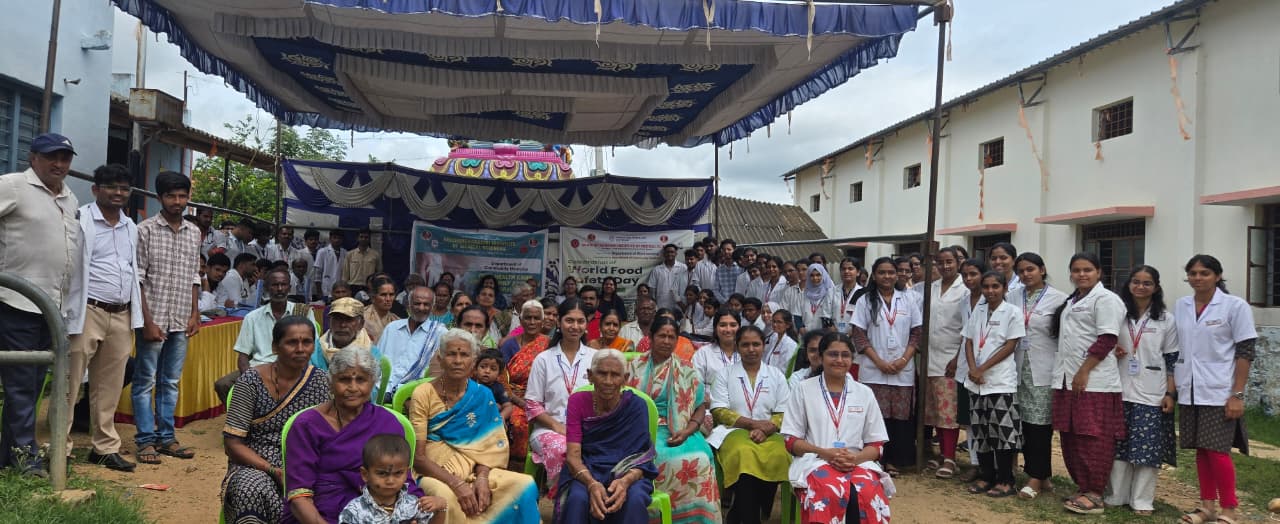
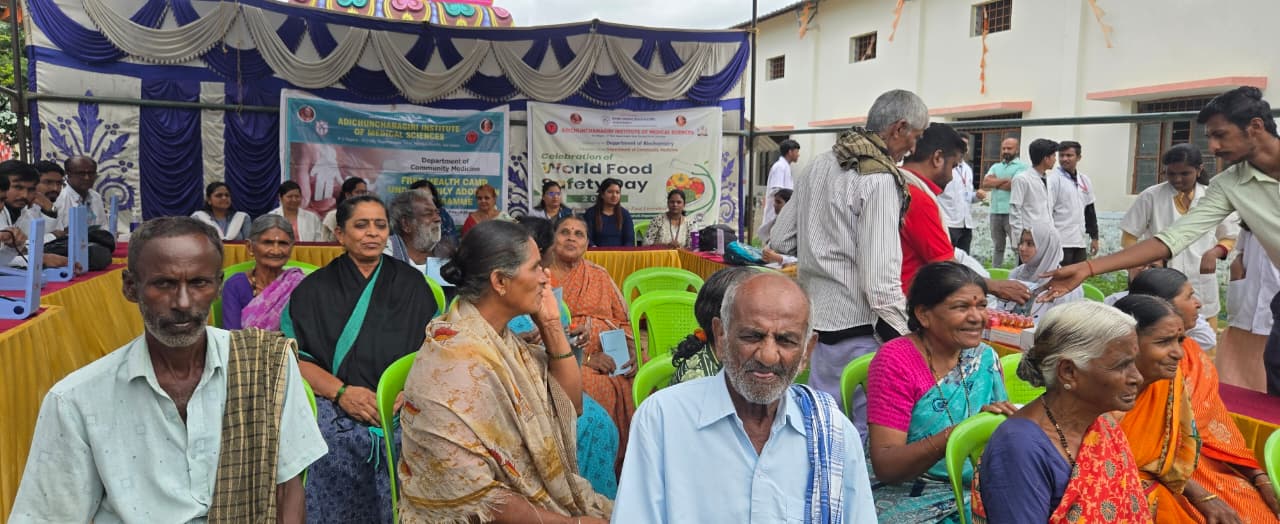
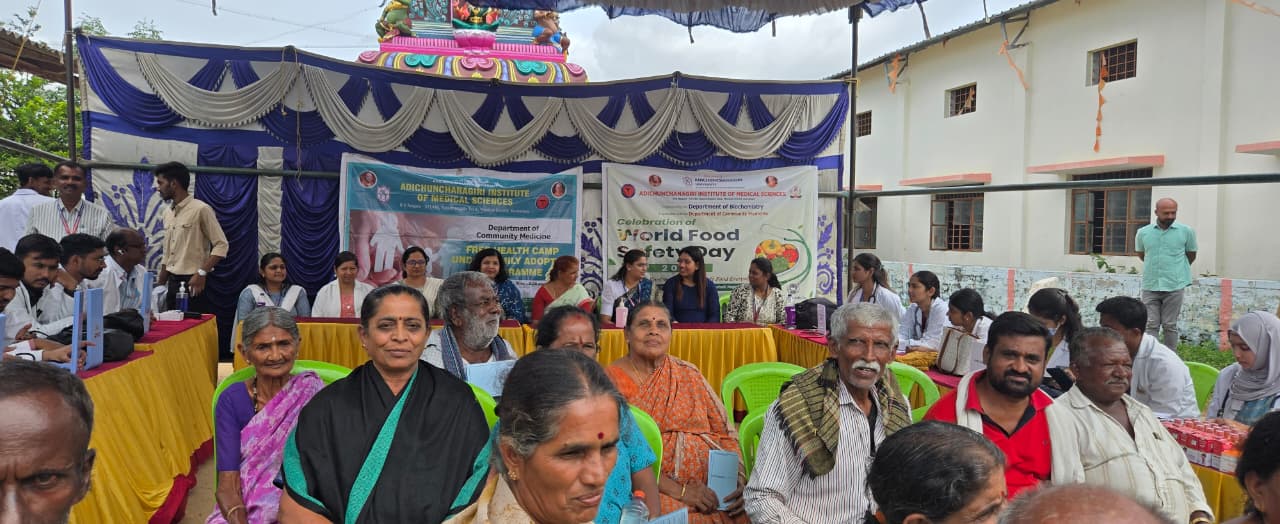
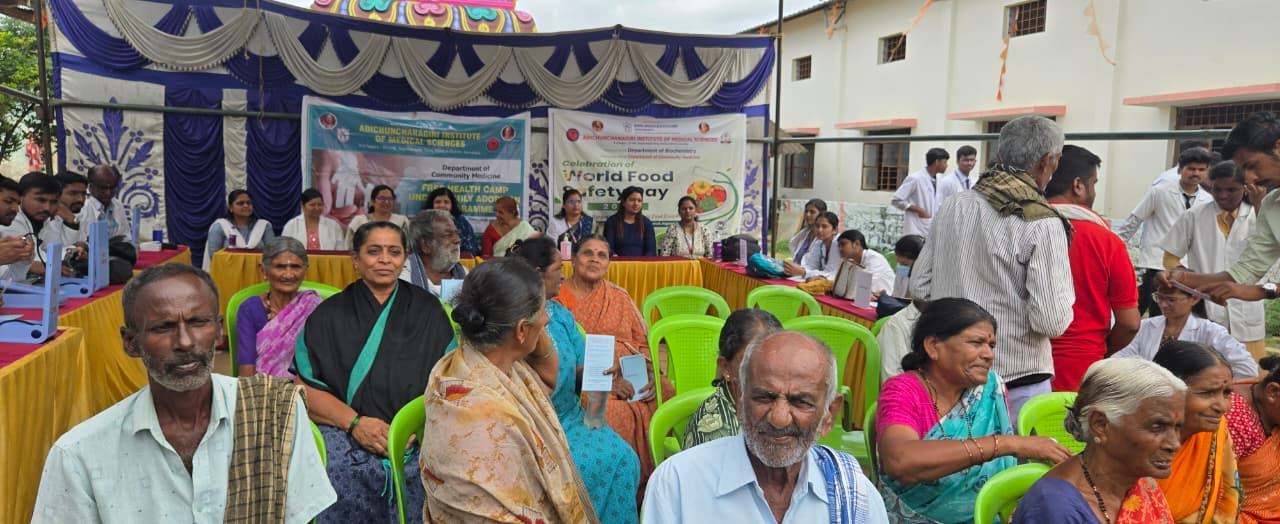
The Department of Biochemistry, Adichunchanagiri Institute of Medical Sciences (AIMS), B.G. Nagara, in association with the Department of Community Medicine, commemorated World Food Safety Day 2026 on 23rd June 2026 at FAP Village, Kuchahalli, Nagamangala Taluk. The programme commenced at 10:15 AM with the objective of creating awareness about food safety, healthy dietary practices, and preventive healthcare among the rural population.
The awareness session was led by Dr. Aliya Nusrath and Dr. Namitha, who educated the villagers on the importance of safe food handling, hygienic food storage, and balanced nutrition for maintaining good health and preventing food-borne illnesses. Phase I MBBS students actively participated by demonstrating the correct hand-washing technique and presenting an informative role play highlighting the harmful effects of junk food consumption, particularly among children.
A free health screening camp was also organized, offering services such as Body Mass Index (BMI) assessment, General Random Blood Sugar (GRBS) testing, eye examinations, general health check-ups, and distribution of essential medicines.
The programme witnessed enthusiastic participation from the villagers and was highly appreciated by the community. It successfully enhanced awareness regarding food safety, personal hygiene, balanced nutrition, and preventive healthcare, reinforcing the institution’s commitment to community health promotion.
|
|
12
|
Feedback Analysis (Brief)
|
The programme received an encouraging response from the villagers, who actively participated in the awareness sessions, role play, hand-washing demonstration, and health screening camp. The interactive approach adopted by the faculty and Phase I MBBS students enhanced community engagement and facilitated better understanding of food safety, nutrition, and personal hygiene. Participants appreciated the free health check-ups and the opportunity to clarify their health-related queries.
|
|
13
|
SDG’s Addressed
|
· SDG 1 – No Poverty
· SDG 2 – Zero Hunger
· SDG 3 – Good Health and Well-being:
· SDG 4 – Quality Education:
· SDG 10 – Reduced Inequalities: Rural health outreach
· SDG 16 – Peace, Justice and Strong Institutions:
· SDG 17 – Partnerships for the Goals:
|
|
14
|
Outcome
|
· Increased awareness among villagers regarding safe food handling, proper food storage, and healthy dietary practices.
· Improved knowledge of the importance of hand hygiene in preventing food-borne diseases.
· Early identification of individuals requiring medical attention through BMI assessment, GRBS testing, eye examination, and general health screening.
· Strengthened community participation and reinforced the institution’s commitment to preventive and promotive healthcare.
· Enhanced communication and community outreach skills among Phase I MBBS students.
|
|
15
|
Challenges Faced
|
· Limited time to address all individual health concerns in detail.
· Language and literacy barriers among some participants required repeated explanations and demonstrations.
· Variable awareness levels regarding nutrition and food safety practices.
· Logistical constraints in conducting multiple screening activities simultaneously.
|
|
16
|
Recommendations
|
· Organize regular follow-up health education and screening camps in rural communities.
· Develop and distribute educational materials in the local language to reinforce key messages.
· Involve local health workers and community leaders to ensure sustained awareness and behavioural change.
· Expand future programmes to include nutrition counselling, food adulteration awareness, and sanitation education.
· Encourage continued student participation in community-based health promotion activities to strengthen experiential learning.
|