|
SL. No.
|
Particulars in Field
|
Inputs
|
|
1
|
Event Name
|
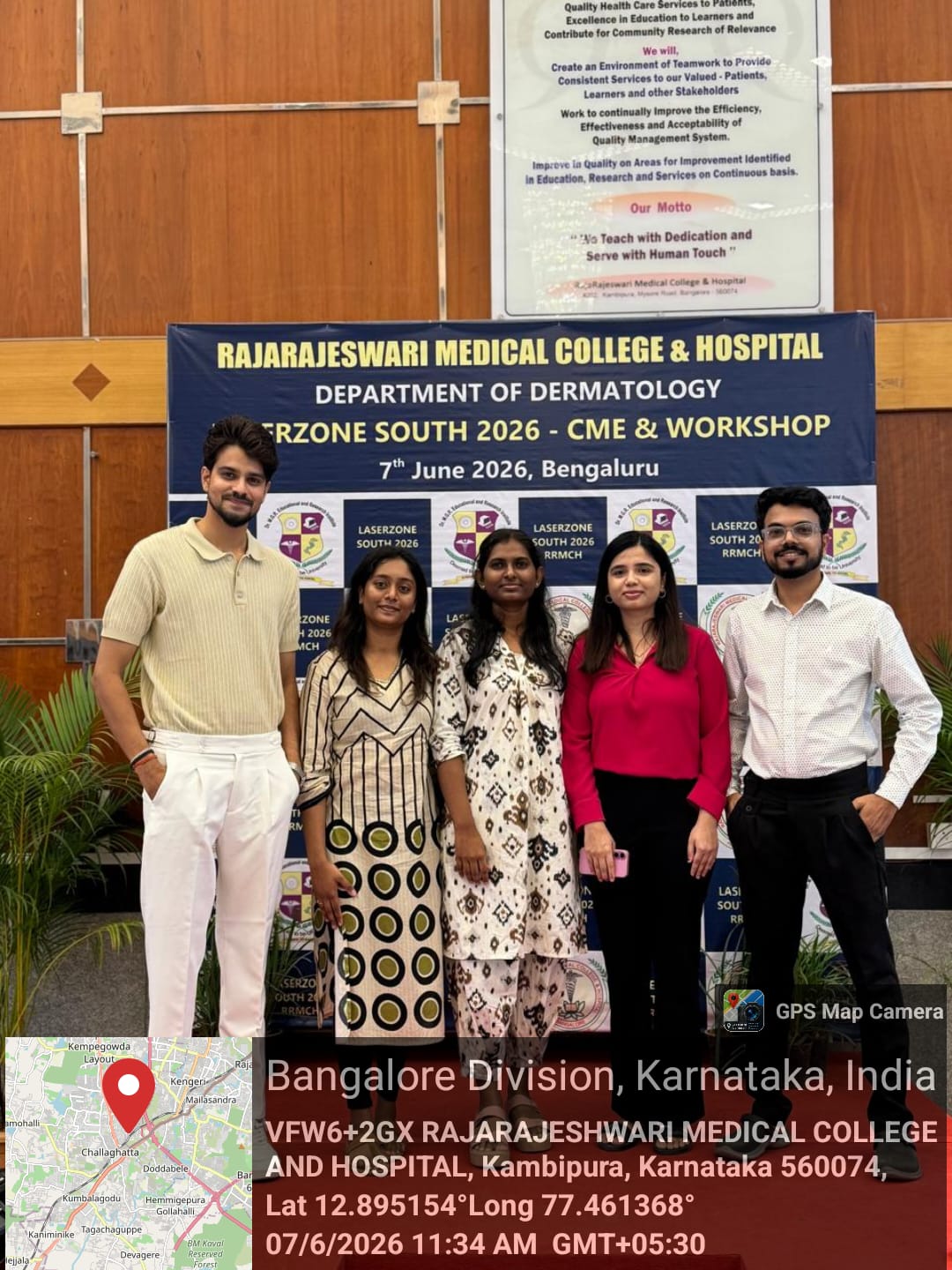
Laser and Energy Based Devices – Workshop
|
|
2
|
Organizing Department/Institution/Committee/Others
|
DEPARTMENT OF DERMATOLOGY, RAJARAJESWARI MEDICAL COLLEGE & HOSPITAL, BENGALURU
|
|
3
|
Type of Event
|
CME and Workshop
|
|
4
|
Level of Event
|
State level
|
|
5
|
Collaboration/Accreditation of any
|
APPLIED FOR 2 CREDIT POINTS FROM KARNATAKA MEDICAL COUNCIL
|
|
6
|
Date/s and Duration
|
7th June 2026, 9:00 AM – 5:00 PM (One Day Workshop)
|
|
7
|
Venue
|
RAJARAJESWARI MEDICAL COLLEGE & HOSPITAL (RRMCH), BENGALURU – 560074
|
|
8
|
Details of delegates/ target audience
|
Dermatologists, Dermatology Postgraduates, Consultants, Residents and practitioners
|
|
9
|
Total Number of delegates/audience attended
|
Postgraduates
1) Dr. MANJUNATH B KAJAGAR
2) Dr. NISARGA YOGANAND
3) Dr. RANJEETHA S CHAUWAN
4) Dr. RAKSHITH D
5) Dr. AKSHATHA V REDDY
|
|
10
|
Objective/s of the Event
|
To provide comprehensive knowledge regarding laser and energy-based devices used in dermatology.• To familiarize participants with the principles, indications, and applications of CO₂ Laser, MNRF, Q-Switched Nd:YAG Laser, Diode Laser and HIFU.• To enhance understanding of patient selection, procedural techniques, and safety precautions in laser dermatology.• To discuss practical aspects, advantages, limitations, and complications associated with various energy-based devices.• To improve clinical skills through expert-led lectures and interactive sessions.• To promote evidence-based use of laser technologies in dermatological practice.
.
|
|
11
|
Brief Report of the Event (in about 200 words)
|
one-day workshop on “Laser and Energy-Based Devices” was held on 07 June 2026 at Rajarajeswari Medical College & Hospital, Bengaluru. The programme was designed to update participants on recent advances in laser and energy-based technologies used in dermatological practice. The workshop featured a series of expert-led sessions covering the scientific principles, device selection, treatment protocols, and emerging applications of various modalities including CO₂ Laser, Microneedling Radiofrequency (MNRF), Q-Switched Nd YAG Laser, Diode Laser, and High-Intensity Focused Ultrasound (HIFU).
The faculty highlighted evidence-based approaches to laser treatments, emphasizing appropriate patient evaluation, procedural planning, risk mitigation, and post-procedure care. Clinical experiences, practical tips, and case-based discussions provided valuable insights into real-world applications of these technologies. Interactive question-and-answer sessions encouraged active participation and facilitated knowledge exchange between faculty members and delegates. The workshop concluded with a post-assessment and discussion on future trends in laser dermatology. The programme successfully enhanced participants’ understanding of contemporary procedural dermatology and reinforced the importance of safe and judicious use of energy-based devices in clinical practice.
|
|
12
|
Feedback Analysis (Brief)
|
The overall feedback from participants was highly encouraging. Delegates appreciated the scientific content, systematic presentation of topics, and practical relevance of the sessions. Participants found the discussions on device selection, treatment planning, and complication prevention particularly useful for day-to-day clinical practice. The interactive format of the workshop promoted active learning and enabled participants to clarify doubts directly with experts. Many attendees expressed that the programme enhanced their awareness of current technological advancements and improved their understanding of evidence-based laser procedures. The workshop was widely perceived as academically enriching and clinically relevant. Dr. RANJEETA S CHAUWAN, Dr. NISARGA YOGANAND, and Dr. MANJUNATH B KAJAGAR, Dr. AKSHATHA V REDDY, Dr. RAKSHITH D attended the workshop as delegates.
|
|
13
|
Outcome:
|
Enhanced knowledge of contemporary laser and energy-based technologies used in dermatology.
Improved understanding of device-specific indications and treatment protocols.
Strengthened competency in selecting appropriate therapeutic modalities based on patient and disease characteristics.
Increased awareness regarding procedural safety, adverse event prevention, and post-treatment care.
Facilitated the integration of evidence-based practices into procedural dermatology.
Promoted professional interaction, knowledge sharing, and continued learning among participants and experts.
Improved preparedness to incorporate advanced laser procedures into routine clinical practice.
|
|
14.
|
SDG addressed
|
• SDG 3: Good Health and Well-Being
• SDG 4: Quality Education
• SDG 9: Industry, Innovation and Infrastructure
• SDG 17: Partnerships for the Goals
|
|
15.
|
Challenges faced
|
NIL
|
|
16.
|
Recommendations
|
NIL
|