|
SL. No.
|
Particulars in Field
|
Inputs
|
|
1
|
Event Name
|
PEDIATRIC DERMATOLOGY FOR DISCERNING CLINICIANS
|
|
2
|
Organizing Department/Institution/Committee/Others
|
DEPARTMENT OF PEDIATRIC DERMATOLOGY,INDIRA GANDHI INSTITUTE OF CHILD HEALTH,BENGALURU
|
|
3
|
Type of Event
|
CME
|
|
4
|
Level of Event
|
National level
|
|
5
|
Collaboration/Accreditation of any
|
PEDIATRIC DERMATOLOGY FOUNDATION AND BANGALORE DERMATOLLOGICAL SOCIETY
|
|
6
|
Date/s and Duration
|
7TH June 2026
|
|
7
|
Venue
|
Indira Gandhi Institute of Child Health auditorium,3rd floor,Bengaluru
|
|
8
|
Details of delegates/ target audience
|
Dermatology post graduates, Consultants and practitioners
|
|
9
|
Total Number of delegates/audience attended
|
Postgraduates
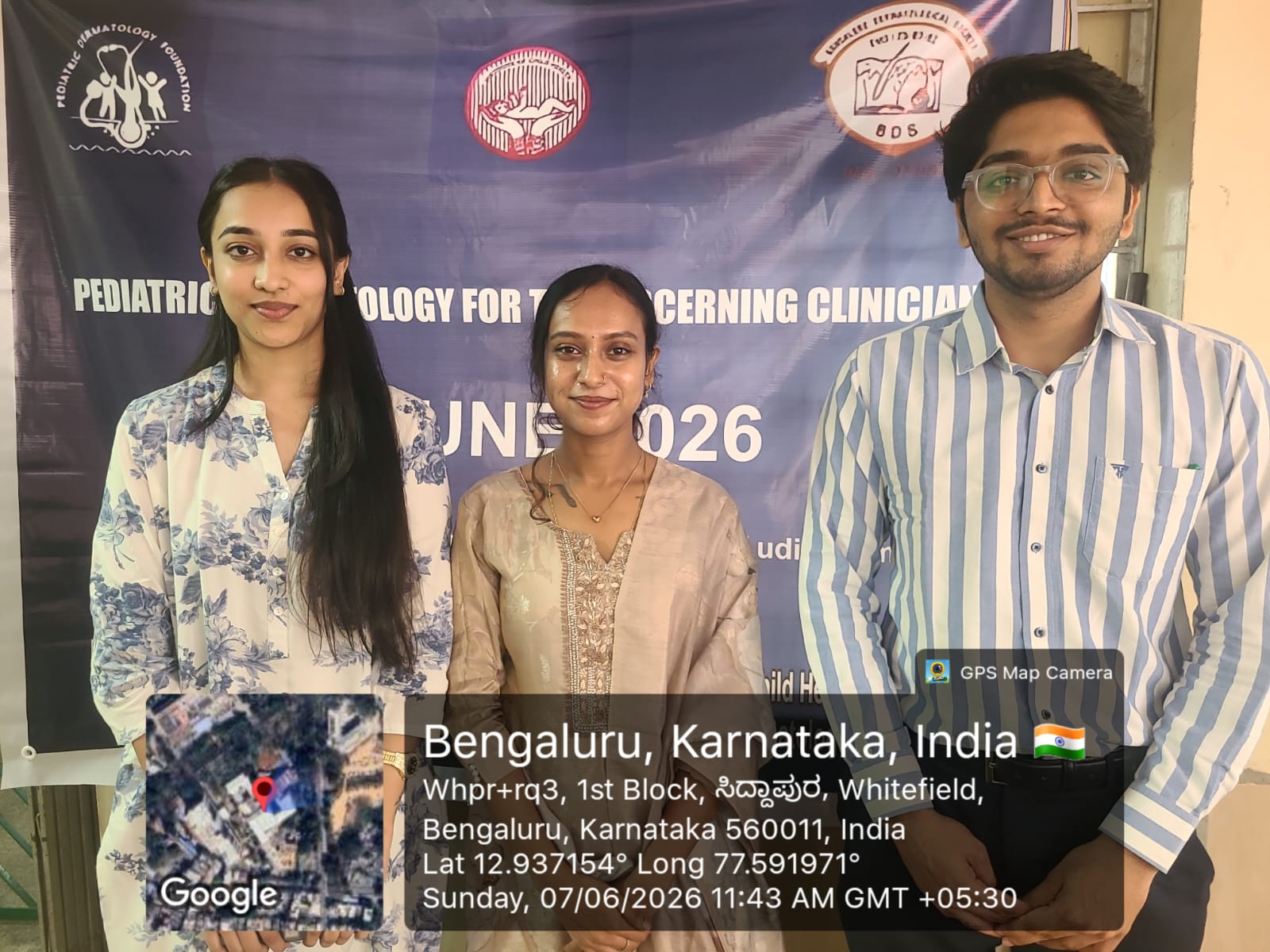
1) Dr. AMOGH N GOURE
2) Dr. APOORVA S
3) Dr. R DIVYASREE
|
|
10
|
Objective/s of the Event
|
· The primary objectives of PEDIATRIC DERMATOLOGY FOR DISCERNING CLINICIANS were to:
· To enhance the diagnostic approach to common and uncommon pediatric dermatological disorders through interactive case-based discussions.
· To improve clinical reasoning and differential diagnosis skills in challenging pediatric dermatology cases.
· To update participants on evidence-based management strategies for difficult-to-treat dermatological conditions in children.
· To revisit the clinical indications, efficacy, adverse effects, and monitoring of less commonly used but important dermatological drugs such as dapsone and colchicine.
· To provide a platform for expert panel discussions on practical management issues encountered in pediatric dermatology practice.
· To promote interactive learning through quizzes, case viewing sessions, and question–answer discussions.
· To facilitate exchange of knowledge and clinical experiences among dermatologists, pediatricians, postgraduate students, and healthcare professionals.
· To strengthen competence in the diagnosis and management of pediatric skin diseases, thereby improving patient care outcomes.
.
|
|
11
|
Brief Report of the Event (in about 200 words)
|
Continuing Medical Education (CME) program titled “Pediatric Dermatology for the Discerning Clinician” was successfully conducted on 7th June 2026 at the Auditorium, Third Floor, Indira Gandhi Institute of Child Health, Bengaluru. The program was organized by the Department of Pediatric Dermatology, Indira Gandhi Institute of Child Health, in collaboration with the Pediatric Dermatology Foundation and Bangalore Dermatological Society.
The event witnessed enthusiastic participation from dermatologists, pediatricians, postgraduate students, and healthcare professionals. The scientific program commenced with registration and case viewing sessions, followed by an interactive quiz. A major highlight of the CME was the extensive case-based discussion led by eminent experts, which provided valuable insights into the diagnosis and management of challenging pediatric dermatological disorders.
A focused session on “Forgotten Drugs in Dermatology” discussed the clinical utility of dapsone and colchicine, emphasizing their indications, benefits, and safety considerations. The program also featured a panel discussion on the management of common yet difficult-to-treat dermatological conditions, allowing participants to engage with experts and clarify practical clinical concerns.
The CME successfully enhanced participants’ knowledge, diagnostic skills, and evidence-based management approaches in pediatric dermatology. The event concluded with closing remarks and high tea, fostering professional networking and academic exchange among attendees.
Dr. Amogh N Cure, Dr. Apoorva S, Dr. R divyashre Attended the program As a delegates
|
|
12
|
Feedback Analysis (Brief)
|
1. Scientific Quality:
Participants rated the scientific content of the CME as excellent. The case-based discussions were highly appreciated for their depth, clinical relevance, and evidence-based approach. The faculty effectively addressed diagnostic challenges and therapeutic decision-making in pediatric dermatology.
2. Workshops and Practical Utility:
Although the program did not include hands-on workshops, the interactive case viewing sessions, quiz, and panel discussions provided substantial practical learning. Delegates found the discussions directly applicable to routine clinical practice.
3. Academic Orientation:
The CME maintained a strong academic focus throughout the program. The presentations were well-structured, up-to-date, and enriched by expert opinions, promoting critical thinking and evidence-based clinical practice.
4. Relevance for Beginners:
Postgraduate students and early-career dermatologists found the program highly beneficial. The systematic approach to case discussions and management strategies enhanced their understanding and confidence in managing pediatric dermatological conditions.
5. Organization and Conduct:
The event was well organized, with smooth registration, effective time management, and excellent coordination of scientific sessions. The venue and hospitality arrangements were appreciated by the participants.
6. Suggestions for Improvement:
Participants suggested incorporating more image-based case discussions, dermoscopy sessions, and hands-on workshops in future programs. Some delegates also recommended extending the duration of panel discussions and allocating additional time for audience interaction and question-answer sessions.
|
|
13
|
Outcome:
|
1.The case-based discussions improved diagnostic skills and promoted a systematic approach to evaluating complex pediatric dermatological conditions.
2.Participants gained updated knowledge regarding evidence-based management strategies for common and challenging pediatric skin disorders
3. The session on forgotten drugs in dermatology increased awareness about the appropriate use, indications, and safety considerations of dapsone and colchicine in clinical practice.
4. The interactive quiz, panel discussions, and question-and- answer sessions facilitated active learning and encouraged meaningful academic exchange between faculty and delegates.
5. The program also provided an excellent platform for networking and sharing clinical experiences among dermatologists, pediatricians, and postgraduate trainees.
6. strengthened participants’ confidence in diagnosing and managing pediatric dermatological diseases,
|
|
14.
|
SDG addressed
|
· SDG 3: Good Health and Well-Being
· SDG 4: Quality Education
· SDG 9: Industry, Innovation and Infrastructure
· SDG 17: Partnerships for the Goals
|
|
15.
|
Challenges faced
|
NIL
|
|
16.
|
Recommendations
|
NIL
|