|
SL. No.
|
Particulars in Field
|
Inputs
|
|
1
|
Event Name/ PGs attended the CME
|
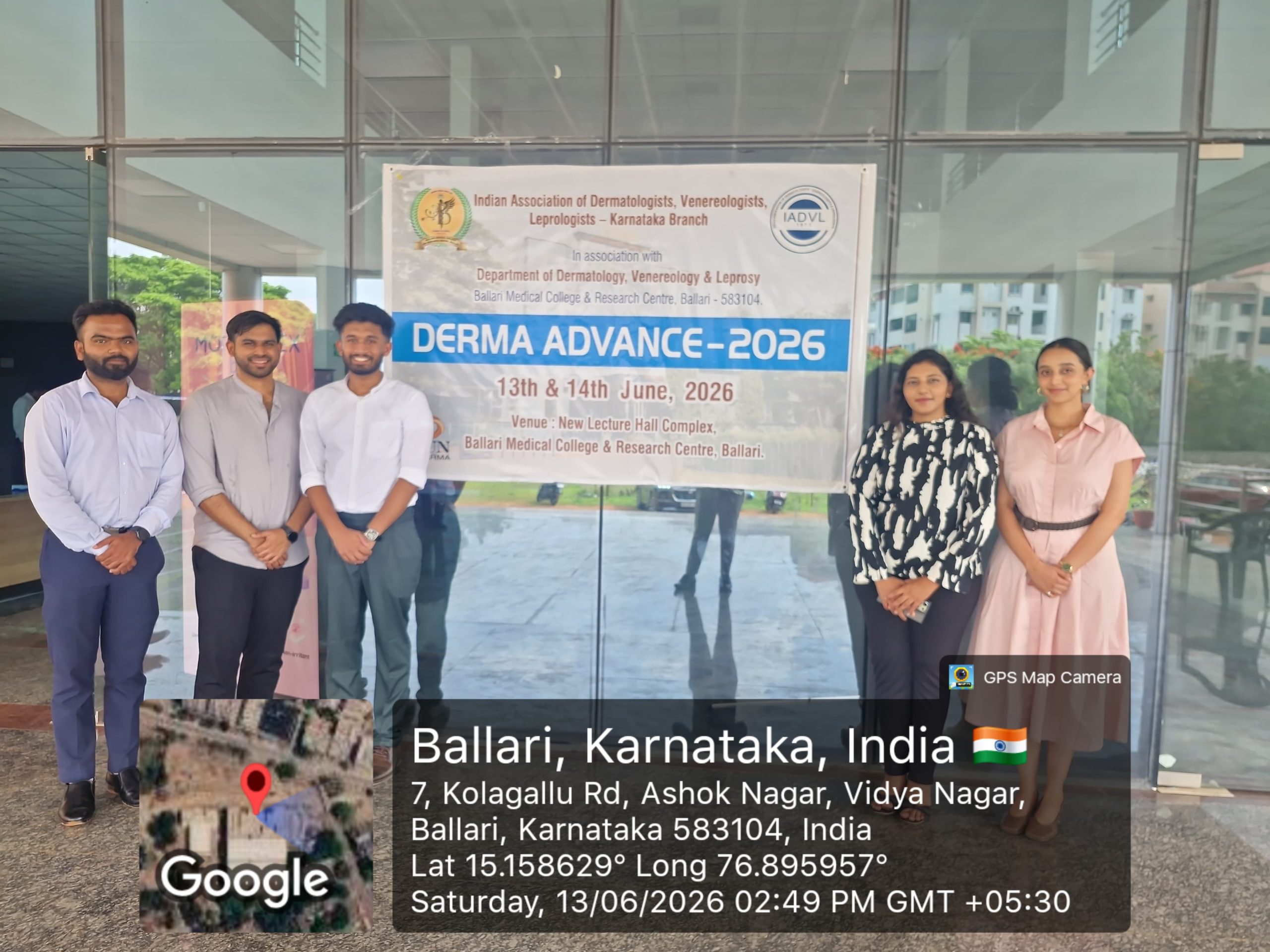
Postgraduates of Dermatology Dept., AIMS, have attended the outside CME namely DERMA ADVANCE 2026
|
|
2
|
Organizing Department/Institution/Committee/Others
|
INDIAN ASSOCIATION OF DERMATOLOGISTS, VENEROLOGISTS AND LEPROLOGISTS
|
|
3
|
Type of Event
|
CME
|
|
4
|
Level of Event
|
State level
|
|
5
|
Collaboration/Accreditation of any
|
IADVL Karnataka
|
|
6
|
Date/s and Duration
|
13th and 14th JUNE 2026
|
|
7
|
Venue
|
BALLARI MEDICAL COLLEGE AND RESEARCH CENTRE
|
|
8
|
Details of delegates/ target audience
|
Dermatology post graduates
|
|
9
|
Total Number of delegates/audience attended
|
Postgraduates
1) Dr. B SAI VAMSI
2) Dr. J HARSHINI
3) Dr. JAYAPRAKASH
4) Dr. JITHIN JAYARAJ
5) Dr. LAKSHMI G N
|
|
10
|
Objective/s of the Event
|
· The primary objectives of DERMA ADVANCE 2026 were to:
v Prepare final-year postgraduate residents for university practical examinations through structured case-based discussions.
v Strengthen clinical diagnostic skills in Immunobullous disorders, connective tissue disorders, Erythroderma, Hansen’s disease, sexually transmitted infections, and dermatological emergencies.
v Enhance competency in interpretation of dermatological investigations including histopathology, dermoscopy, OSPE stations, X-rays and dermatological instruments.
v Improve practical examination skills through spotter discussions, viva-oriented teaching, and systematic long and short case presentation.
v Reinforce evidence-based management of common and complex dermatological disorders with emphasis on current treatment protocols.
v Develop confidence in clinical reasoning, differential diagnosis, and bedside examination techniques.
v Provide guidance on theory examination strategies, practical examination preparation, and effective presentation during postgraduate assessments.
v Promote academic excellence through interaction with experienced faculty and university examiners.
|
|
11
|
Brief Report of the Event (in about 200 words)
|
Dermatology postgraduate residents participated in DERMA ADVANCE–2026, a comprehensive academic orientation programme designed primarily for final-year postgraduate students preparing for university examinations. The programme focused on enhancing clinical competence through structured case-based discussions, practical demonstrations, and examination-oriented teaching.
Scientific sessions covered Immunobullous disorders, connective tissue disorders, Erythroderma, Hansen’s disease, sexually transmitted diseases including genital ulcer and urethral discharge, along with systematic discussion of dermatology spotters. Hands-on academic sessions on OSPE, dermatological instruments, X-rays, histopathology, and dermoscopy strengthened participants’ practical diagnostic skills.
Special sessions on pharmacology, examination strategy, theory preparation, and practical examination techniques provided valuable guidance for postgraduate assessments. Faculty members emphasized clinical reasoning, evidence-based management, differential diagnosis, and effective case presentation.
The programme also encouraged interaction between residents and experienced academicians, promoting academic excellence and professional confidence. Overall, DERMA ADVANCE–2026 served as an intensive revision and skill-development programme, enabling participants to improve their diagnostic approach, examination performance, and preparedness for final postgraduate university examinations.
Dr. B Sai Vamsi, Dr. J Harshini, Dr. Jayaprakash , Dr Jithin Jayaraj and Dr. Lakshmi G N attended the programme as delegates.
|
|
12
|
Feedback Analysis (Brief)
|
1. Scientific Quality
Participants appreciated the comprehensive examination-oriented sessions that integrated clinical knowledge with practical application, making the programme highly relevant for final-year postgraduate residents.
2. Workshops and Practical Utility
Case discussions, OSPE, dermoscopy, histopathology, instruments, X-rays and spotter sessions significantly improved practical diagnostic skills and examination confidence.
3. Examination Guidance
Dedicated sessions on theory preparation, practical examination techniques, and viva presentation provided valuable insights for successful postgraduate university examinations.
4. Clinical Relevance
Faculty emphasized systematic case presentation, differential diagnosis, evidence-based management, and bedside clinical reasoning, making the programme highly useful for routine dermatology practice.
|
|
13
|
Outcome:
|
- Enhanced Clinical Competency
Participants improved their diagnostic approach to immunobullous disorders, connective tissue disorders, erythroderma, Hansen’s disease, and sexually transmitted infections through case-based learning.
- Improved Practical Examination Skills
Training in OSPE, spotters, dermoscopy, histopathology, instruments, and clinical examination increased confidence in university practical examinations.
- Strengthened Academic Performance
Sessions on theory preparation, viva techniques, and examination strategies enhanced academic readiness and analytical thinking.
- Evidence-Based Clinical Practice
Faculty discussions reinforced current treatment protocols, rational drug selection, and structured clinical decision-making.
- Professional Development
Interaction with experienced faculty improved communication skills, confidence, and preparedness for postgraduate assessments and future clinical practice.
- Career Advancement
The programme provided valuable academic mentorship and encouraged continued professional growth through evidence-based dermatology and lifelong learning.
|
|
14.
|
SDG addressed
|
· SDG 3: Good Health and Well-Being
· SDG 4: Quality Education
· SDG 8: Decent Work and Economic Growth
· SDG 9: Industry, Innovation and Infrastructure
· SDG 17: Partnerships for the Goals
|
|
15.
|
Challenges faced
|
NIL
|
|
16.
|
Recommendations
|
NIL
|