| SL.No. |
Particulars in Field |
Inputs |
| 1 |
Event Name |
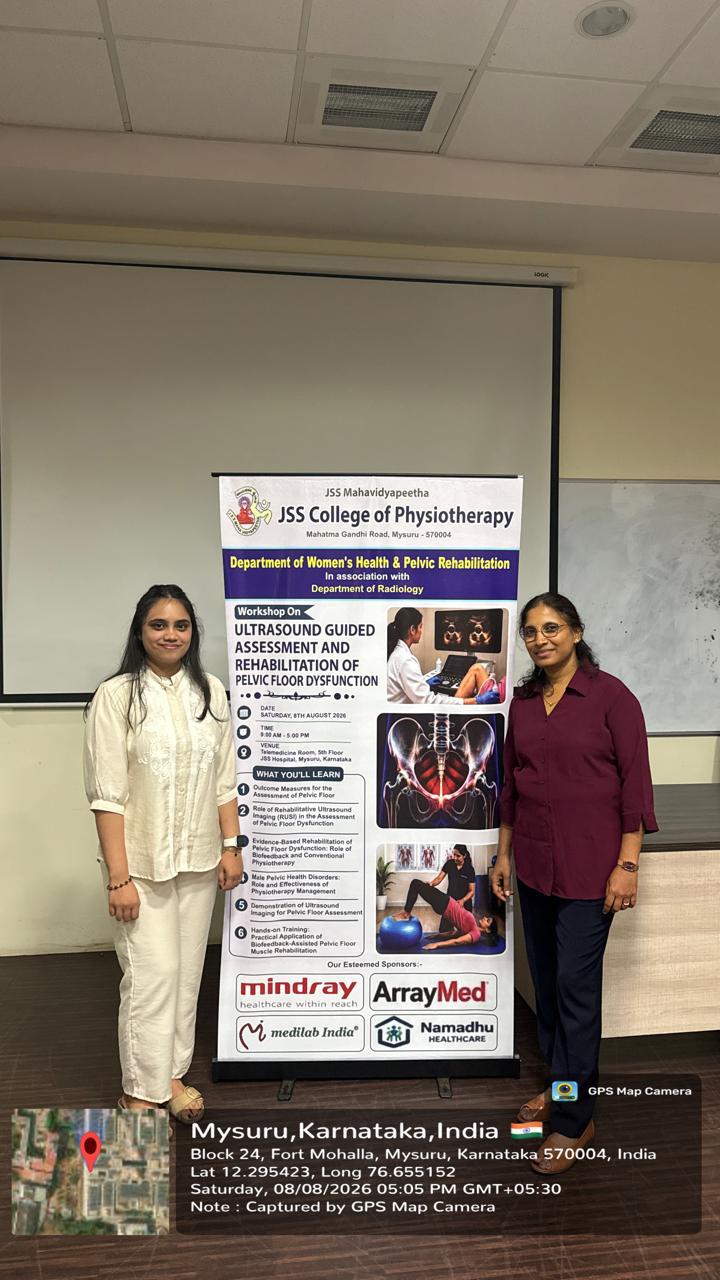
Workshop on Ultrasound Guided Assessment and Rehabilitation of Pelvic Floor Dysfunction |
| 2 |
Organizing Department/Institution/Committee/Others |
Department of Women’s Health & Pelvic Rehabilitation, JSS College of Physiotherapy, Mysuru, in association with Department of Radiology |
| 3 |
Type of Event |
Workshop – theoretical sessions, demonstration, hands-on training and case-based clinical discussion |
| 4 |
Level of Event |
Professional/Academic level |
| 5 |
Collaboration/Accreditation of any |
Department of Radiology, JSS Medical College & Hospital, Mysuru |
| 6 |
Date/s and Duration |
8th August 2026 |
| 7 |
Venue |
Telemedicine hall, JSSH |
| 8 |
Details of delegates/ target audience |
Physiotherapy professionals interested in women’s health, pelvic health and pelvic floor rehabilitation |
| 9 |
Total Number of delegates/ audience attended |
30- 40 members |
| 10 |
Objective/s of the Event |
1. To equip physiotherapy professionals with comprehensive theoretical knowledge and practical skills in the use of rehabilitative ultrasound imaging and biofeedback-assisted rehabilitation for assessment and management of pelvic floor dysfunction.
2. To promote evidence-based, non-invasive and patient-centred clinical practice.
3. To enhance competency in the diagnosis, assessment and rehabilitation of pelvic floor disorders.
4. To improve the quality and standard of pelvic health physiotherapy services.
|
| 11 |
Brief Report of the Event (in about 200 words) |
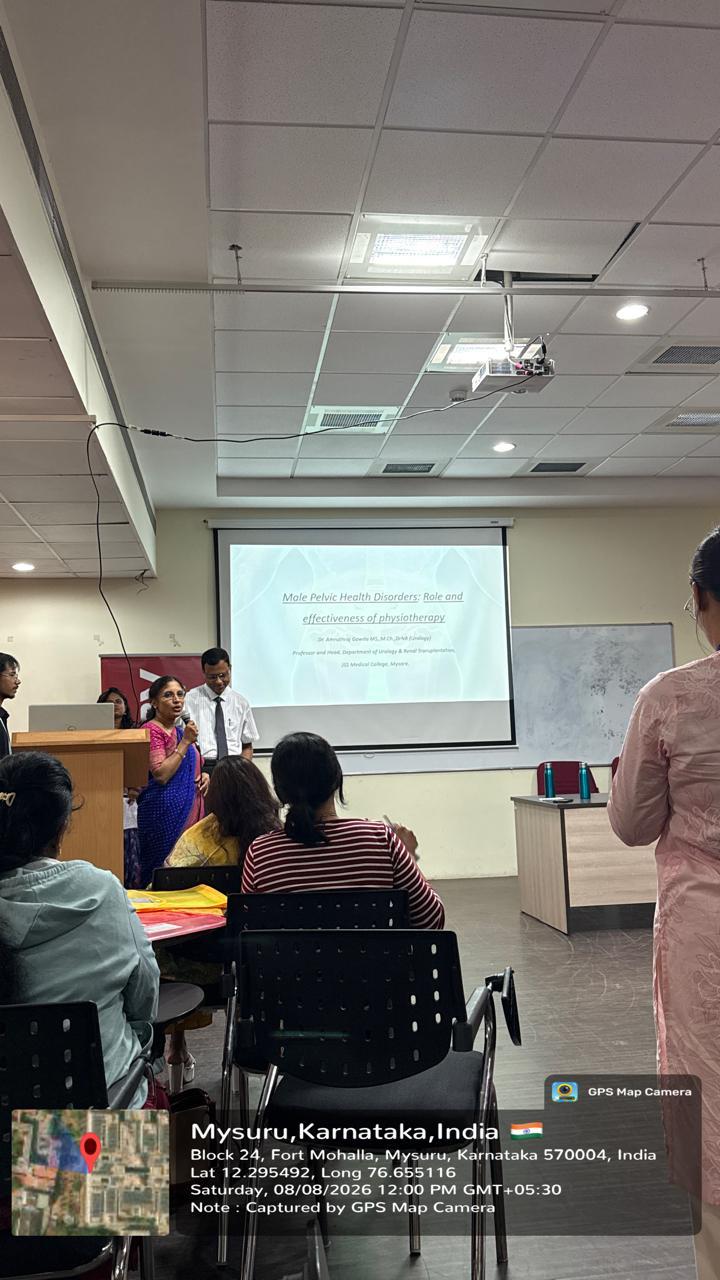
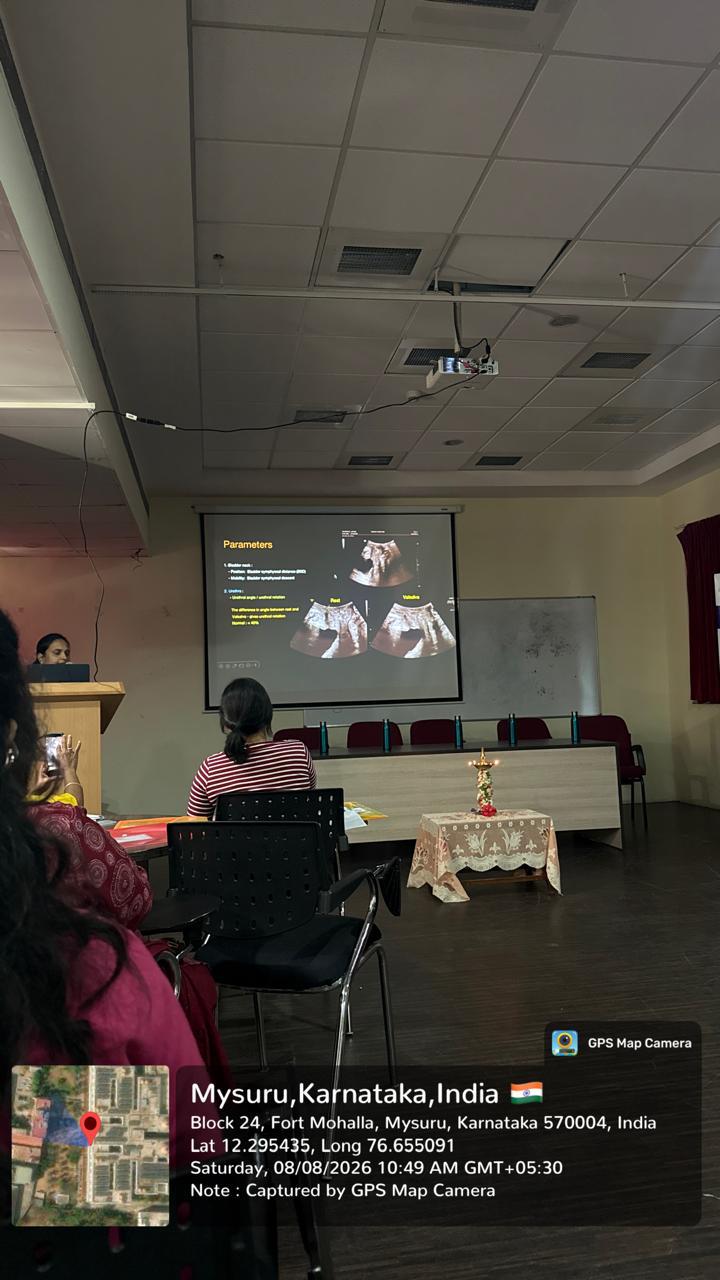
The Department of Women’s Health & Pelvic Rehabilitation, JSS College of Physiotherapy, Mysuru, in association with the Department of Radiology, organised a workshop on “Ultrasound Guided Assessment and Rehabilitation of Pelvic Floor Dysfunction” on 8th August 2026 at the Dr. Shivaratri Rajendra Auditorium, JSS Hospital Campus, Mysuru. The workshop focused on enhancing theoretical knowledge and practical competency in pelvic floor assessment and rehabilitation using ultrasound imaging and biofeedback-assisted techniques. The morning session included lectures on understanding pelvic floor function in women, outcome measures for pelvic floor assessment, the role of rehabilitative ultrasound imaging in pelvic floor dysfunction, evidence-based rehabilitation and the role of biofeedback and conventional physiotherapy. A dedicated session on male pelvic health disorders addressed the role and effectiveness of physiotherapy management. The afternoon session included a demonstration of ultrasound imaging for pelvic floor assessment, followed by hands-on training in biofeedback-assisted pelvic floor muscle rehabilitation. The programme concluded with a case-based clinical discussion and interactive patient feedback, followed by valedictory proceedings and certificate distribution. The workshop provided an integrated learning experience combining theoretical concepts, imaging-based assessment, practical training and clinical application in pelvic floor rehabilitation.
I, Dr. Chinmayi M (PT), Assistant Professor, Department of Physiotherapy, AIMS, attended this workshop conducted by JSS College of Physiotherapy, Mysuru, as a delegate
|
| 12. |
Feedback Analysis (Brief) |
The workshop incorporated theoretical lectures, ultrasound demonstration, hands-on biofeedback-assisted rehabilitation and case-based clinical discussion, providing opportunities for practical and clinically relevant learning. |
| 13. |
Outcomes |
The workshop enhanced exposure to ultrasound-guided pelvic floor assessment and biofeedback-assisted rehabilitation. Participants were provided with opportunities to understand pelvic floor assessment, outcome measures, rehabilitative ultrasound imaging, evidence-based rehabilitation and physiotherapy management of pelvic health disorders. The hands-on session and case-based clinical discussion supported the application of theoretical knowledge to clinical practice |
| 14. |
SDG addressed |
SDG 3 – Good Health and Well-being: Promotion of evidence-based pelvic health assessment and rehabilitation.
SDG 4 – Quality Education: Professional education and practical skill development through structured theoretical and hands-on training.
SDG 5 – Gender Equality: Focus on women’s health and pelvic floor disorders, along with inclusion of male pelvic health disorders.
|
| 15. |
Challenges faced |
NIL
|
| 16. |
Recommendations |
NIL
|