|
SL. No.
|
Particulars in Field
|
Inputs
|
|
1
|
Event Name/PGs attended the CME
|
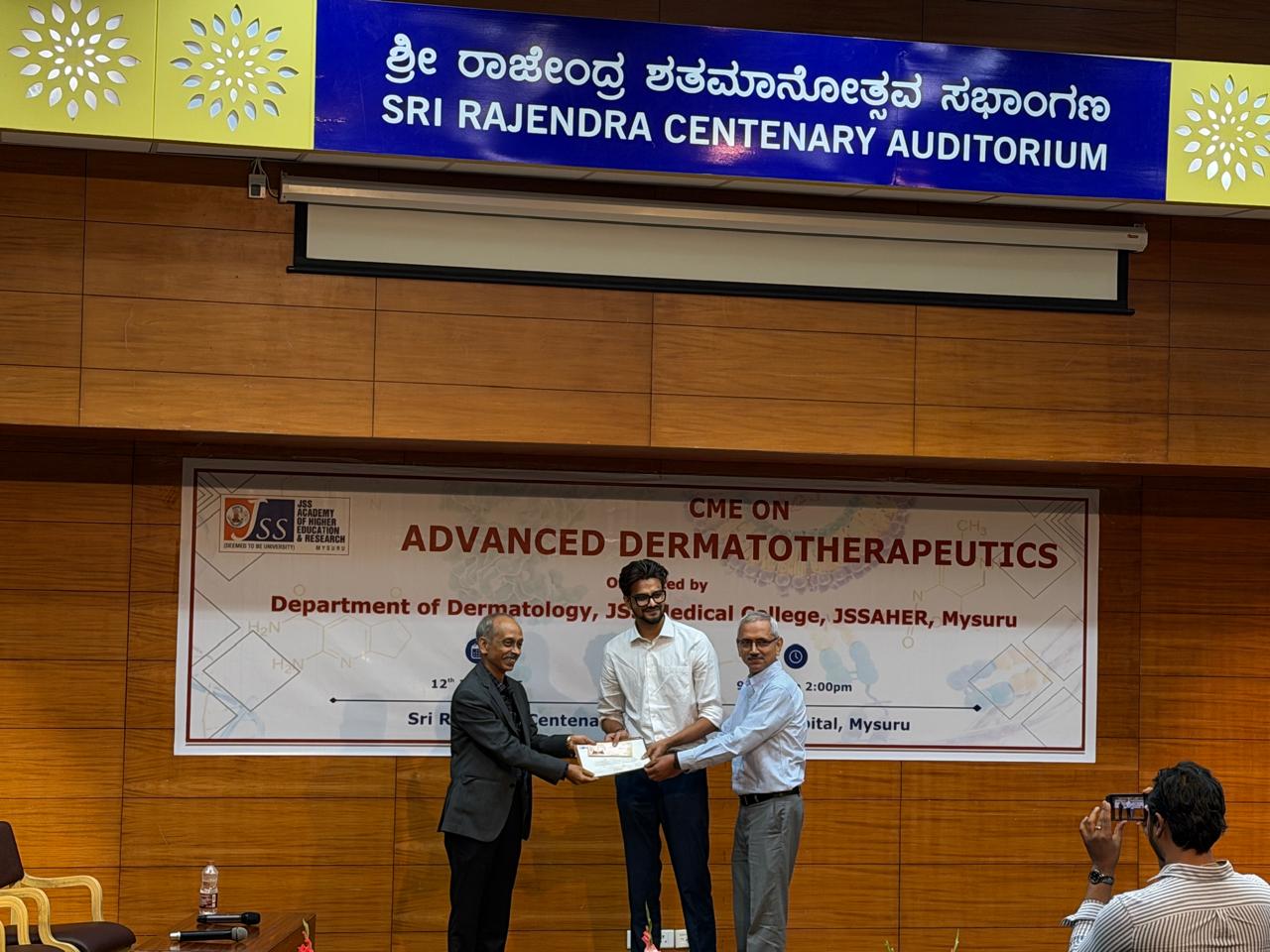
ADVANCED DERMATOTHERAPEUTICS
|
|
2
|
Organizing Department/Institution/Committee/Others
|
Department of Dermatology ,JSS Medical college, JSSAHER, Mysore
|
|
3
|
Type of Event
|
CME
|
|
4
|
Level of Event
|
State level
|
|
5
|
Collaboration/Accreditation of any
|
IADVL Karnataka
|
|
6
|
Date/s and Duration
|
12th July,2026
|
|
7
|
Venue
|
SRCA,3rd Floor, JSS Hospital, MG Road, Mysore
|
|
8
|
Details of delegates/ target audience
|
Dermatology faculty and Dermatology post graduates
|
|
9
|
Total Number of delegates/audience attended
|
Postgraduates
1) Dr. Balijepalli Sai Vamsi – 3rd Year PG
2) Dr. Harshini J – 3rd Year PG
3) Dr. Lakshmi GN – 3rd Year PG
4) Dr. Nisarga Yoganand -2nd Year PG
5) Dr .Shifali Harinath -1st Year PG
6) Dr .Swathi M V-1st Year PG
|
|
10
|
Objective/s of the Event
|
1) Enhance Knowledge of Immune-Mediated Dermatological Disorders
- Update participants on the current concepts in the diagnosis, pathogenesis, and management of immunobullous and papulosquamous disorders.
2) Promote Evidence-Based Therapeutics
- Discuss recent clinical evidence, treatment guidelines, and best practices for managing chronic inflammatory skin diseases.
3) Introduce Emerging Immunomodulatory Therapies
- Familiarize participants with oral JAK inhibitors, newer topical immunomodulators, biologics, and evolving treatment strategies in dermatology.
5) Understand the Role of Older and Repurposed Drugs
- Review the continued relevance of conventional therapies and repurposed medications in the era of biologics and targeted treatments.
6) Explore Novel Therapeutic Advances
- Highlight emerging concepts such as microbiome-based therapies and innovative treatment approaches with potential clinical applications.
6) Encourage Interactive Clinical Learning
•Facilitate case-based discussions and expert panel interactions to improve clinical reasoning and decision-making in difficult dermatological conditions.
7) Strengthen Clinical Decision-Making
•Enable participants to individualize treatment plans by balancing efficacy, safety, accessibility, and patient-specific factors.
8) Support Continuing Medical Education
•Encourage lifelong learning, interdisciplinary collaboration, and professional development through expert-led scientific sessions and academic exchange.
|
|
11
|
Brief Report of the Event (in about 200 words)
|
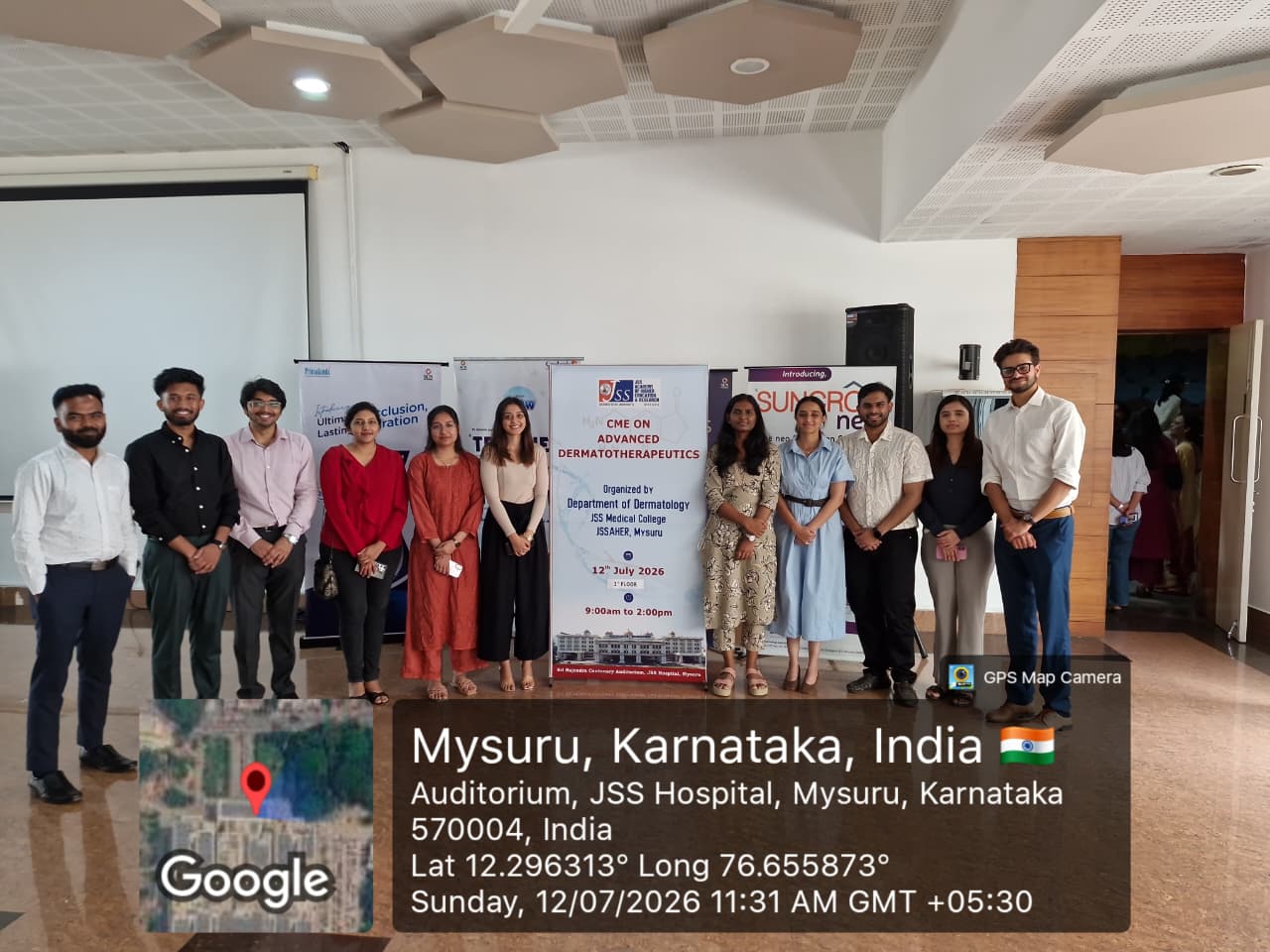
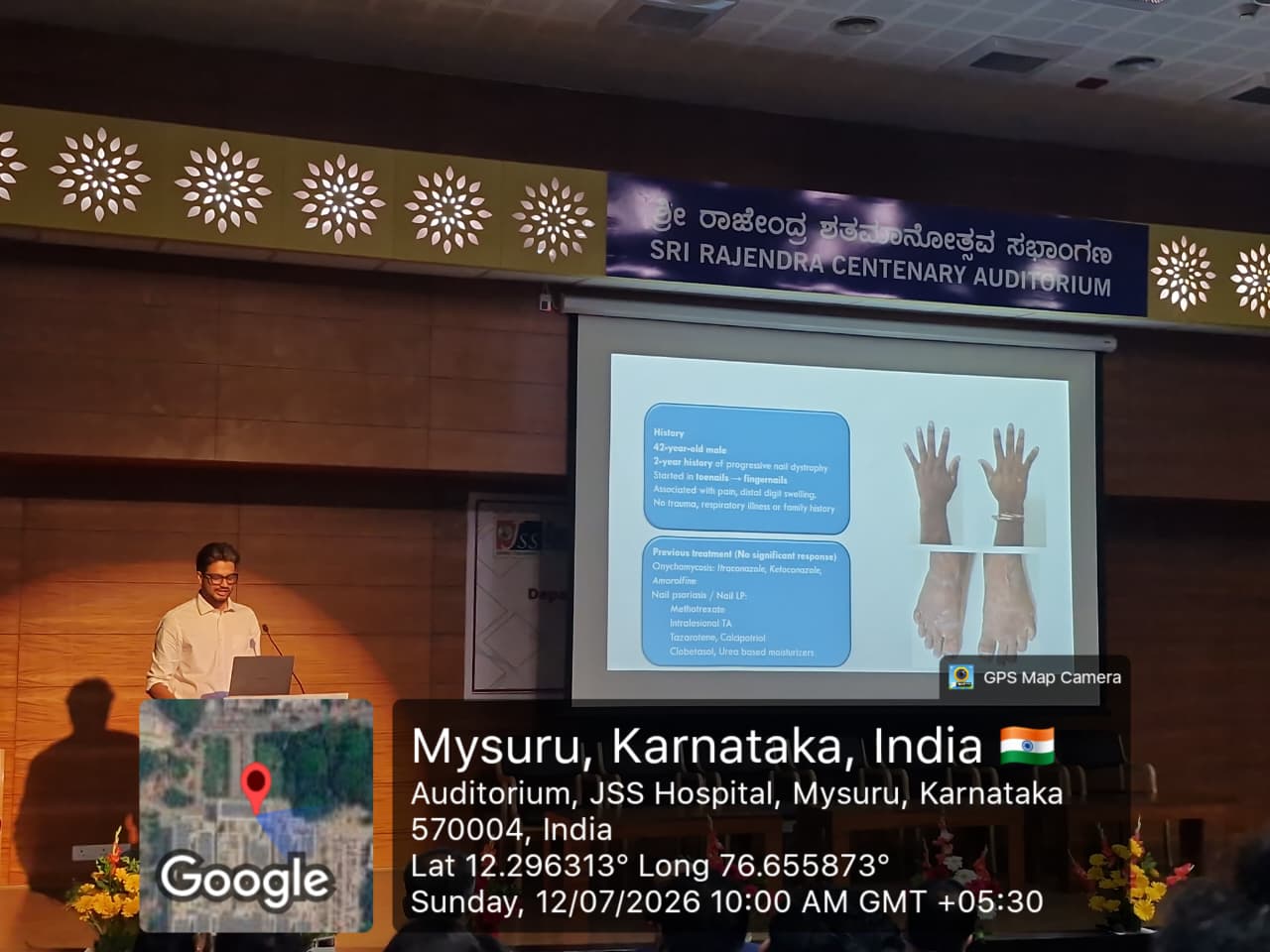
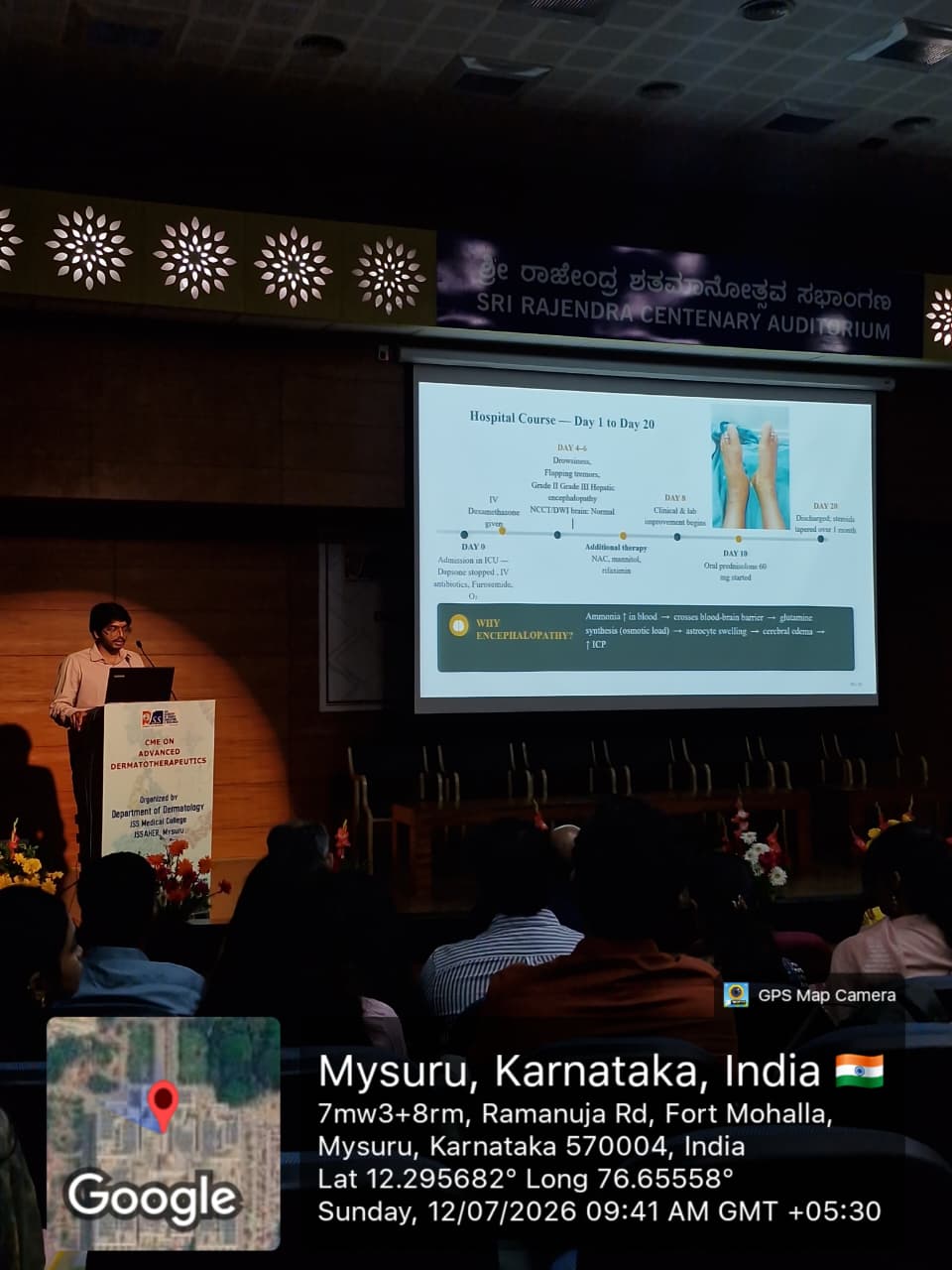
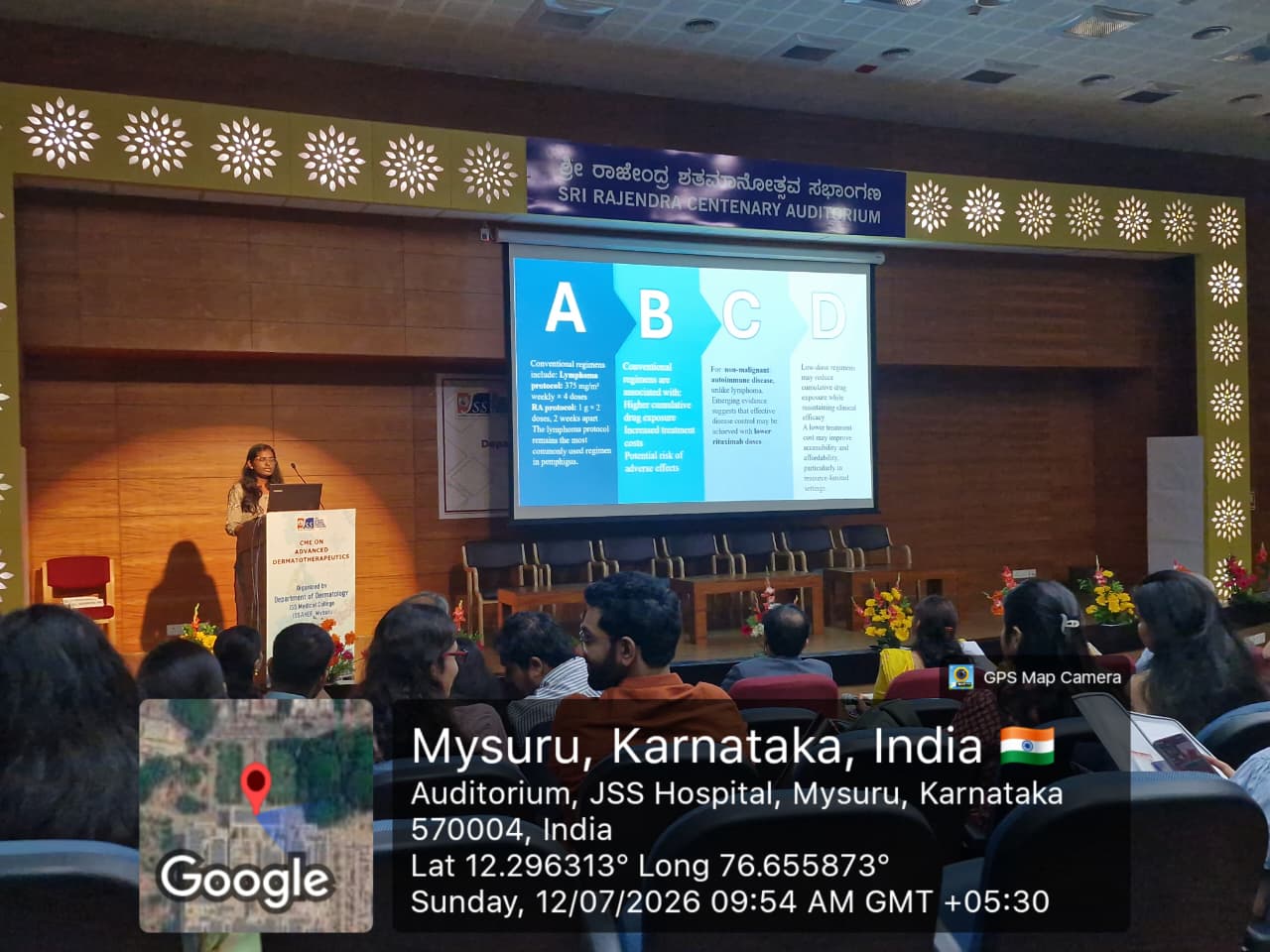
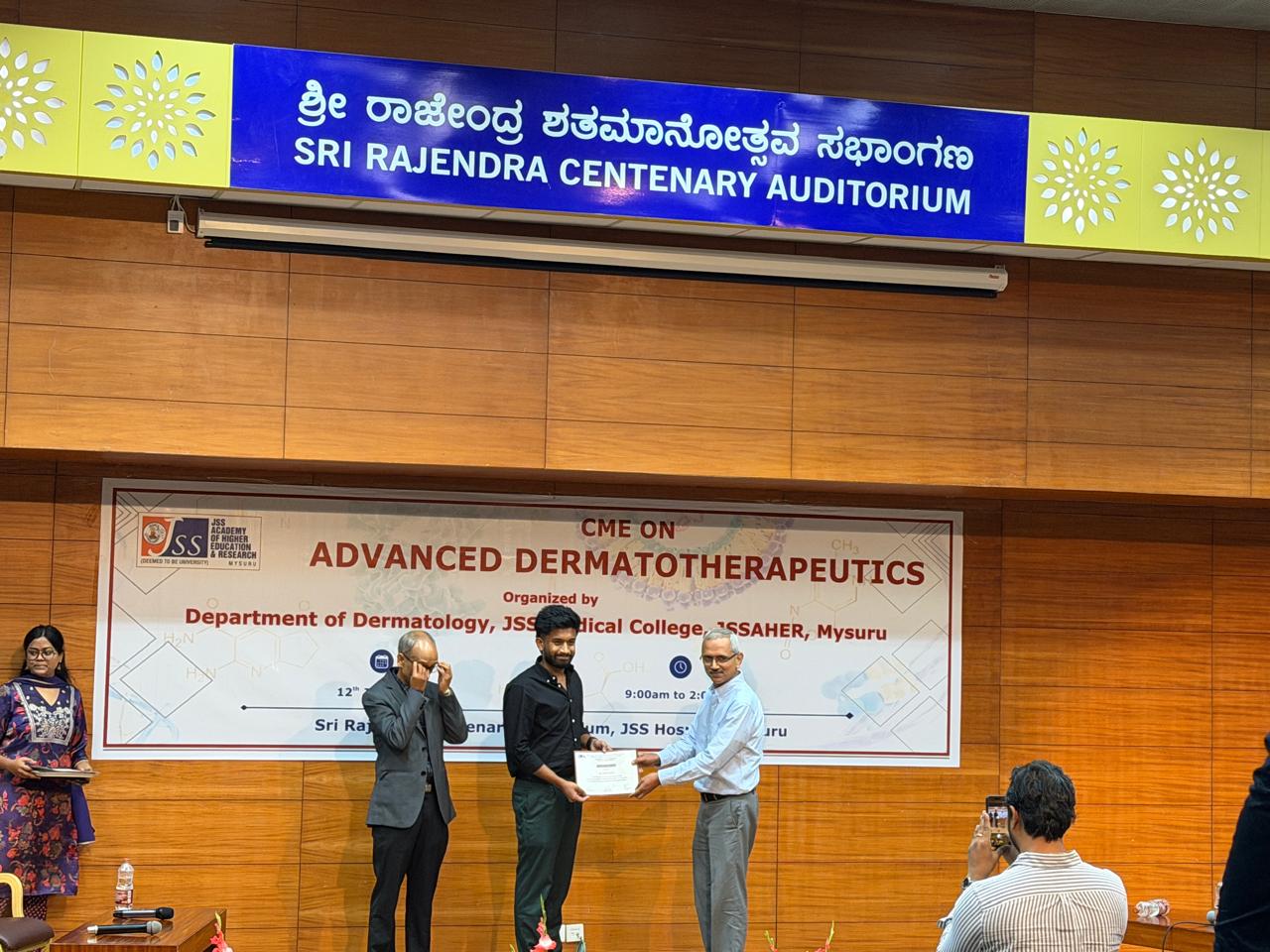
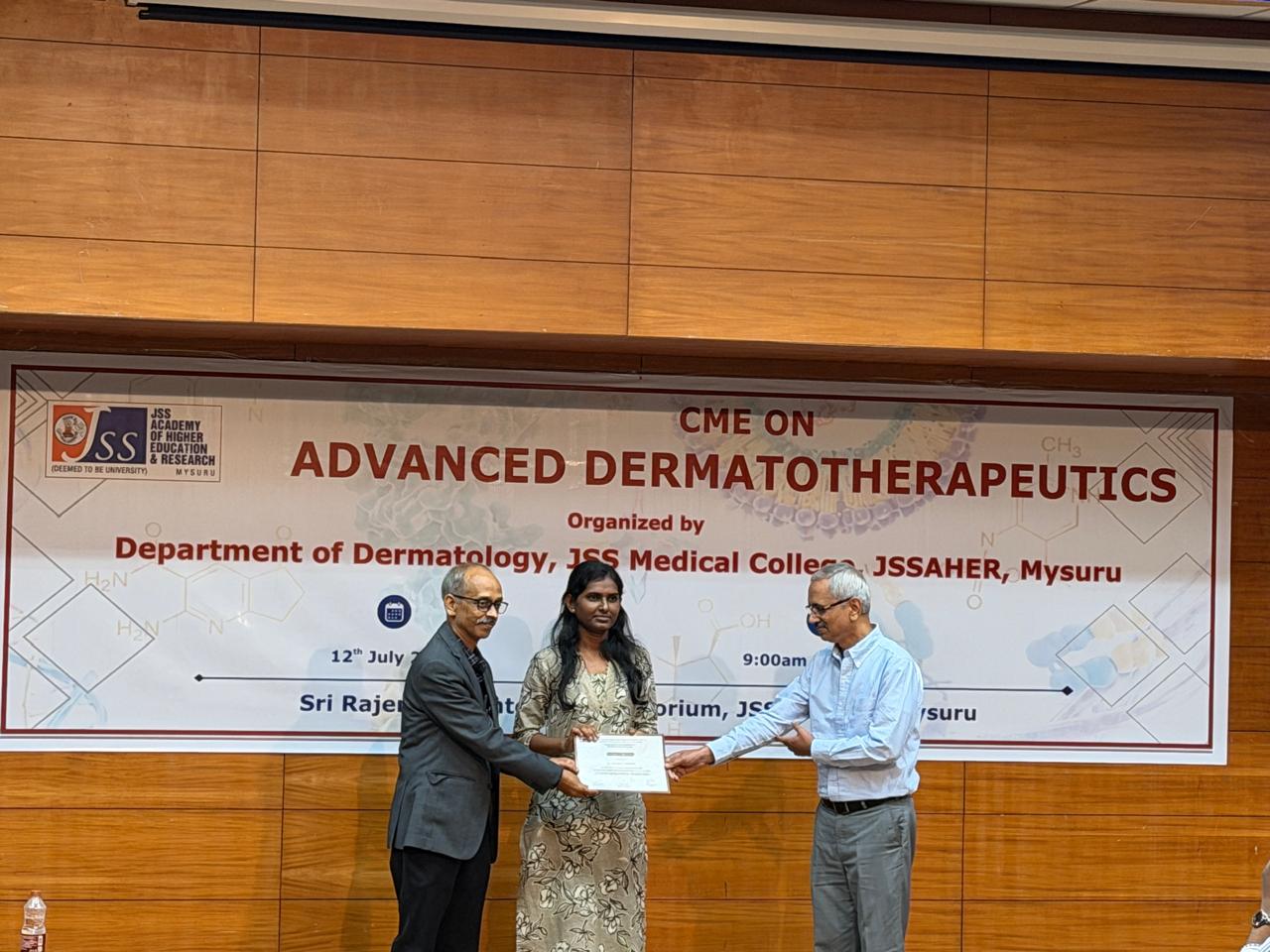
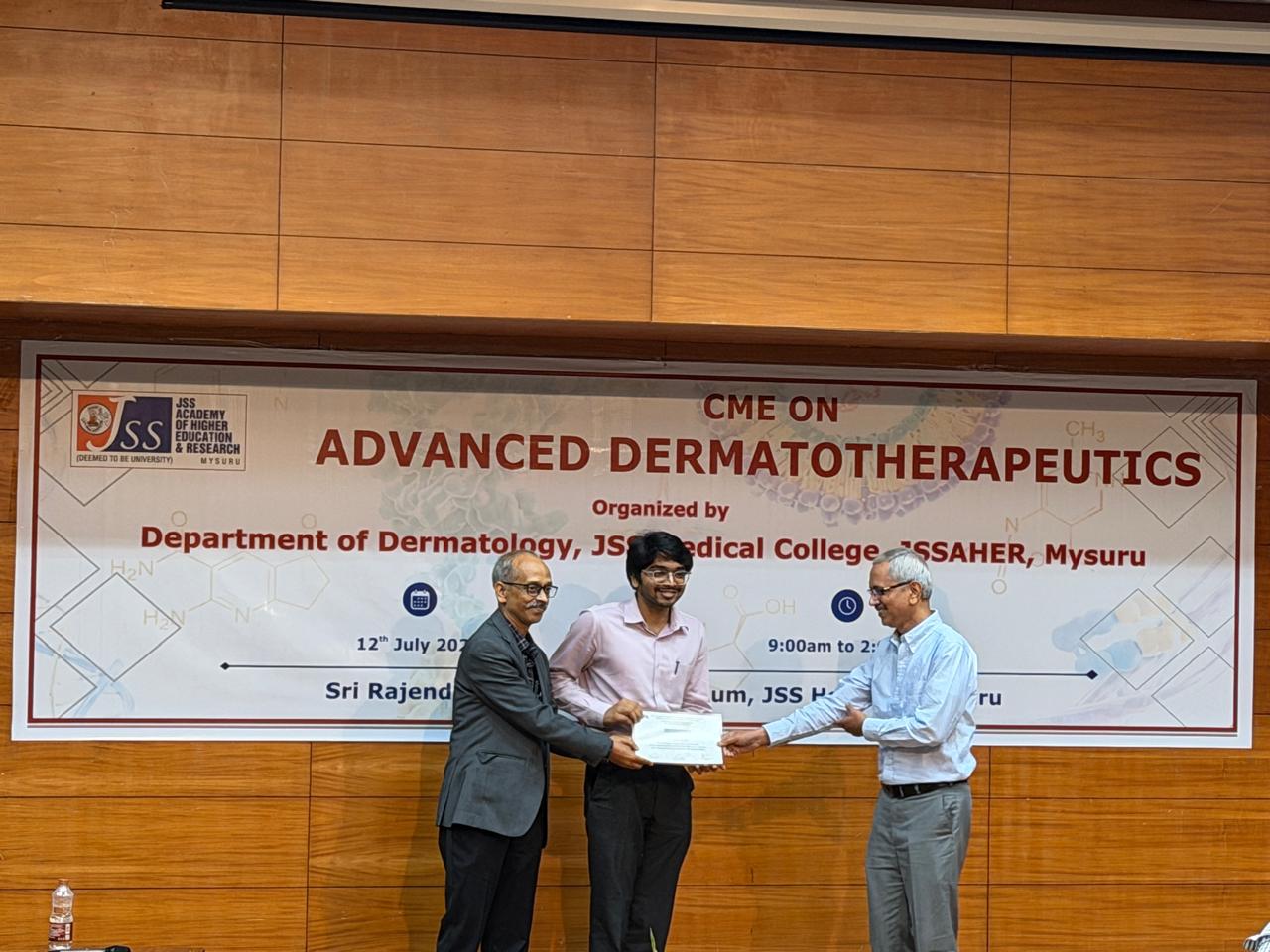
The Postgraduate students from the Department of Dermatology, Adichunchanagiri Institute of Medical Sciences (AIMS), BG Nagara, participated as delegates in the CME “Advanced Dermatotherapeutics” held at JSS Medical College, Mysore, on 12th July 2026. The participants included Dr. Balijepalli Sai Vamsi, Dr. Harshini J, Dr. Lakshmi G.N. (3rd Year PGs), Dr. Nisarga Yoganand (2nd Year PG), and Dr. Shifali Harinath and Dr. Swathi M.V. (1st Year PGs). The CME provided updated knowledge on recent advances and evidence-based therapeutic approaches in dermatology, contributing to their academic and clinical learning.
|
|
12
|
Feedback Analysis (Brief)
|
1. Scientific Sessions: Participants appreciated the evidence-based lectures on immunobullous disorders, papulosquamous disorders, JAK inhibitors, microbiome-based therapies, and newer immunomodulators, which were highly relevant to current dermatology practice.
2. Panel Discussions: Interactive panel discussions on vesiculobullous and papulosquamous disorders were well received, providing practical insights into challenging clinical scenarios and encouraging active audience participation.
3. Clinical Relevance: Delegates valued the emphasis on emerging therapies, repurposed drugs, and therapeutic updates that could be readily incorporated into day-to-day patient management.
4. Paper Presentation: The postgraduate paper presentation session was appreciated for promoting scientific research, critical thinking, and academic interaction among young dermatologists.
5. Organization: Participants commended the smooth coordination, time management, and overall execution of the CME programme.
6. Scope for Improvement: A few attendees suggested allocating more time for audience interaction, case-based discussions, and question-and-answer sessions to facilitate deeper learning.
|
|
13
|
Outcome:
|
1. Enhanced knowledge of the latest evidence-based approaches in the diagnosis and management of immunobullous and papulosquamous disorders.
2. Improved understanding of emerging therapeutic options, including JAK inhibitors, newer topical immunomodulators, microbiome-based therapies, and repurposed drugs.
3. Strengthened clinical decision-making through expert lectures and interactive panel discussions addressing complex dermatological conditions.
4. Increased awareness of recent advances in therapeutics, enabling participants to deliver more effective and patient-centred care.
5. Encouraged scientific thinking and research aptitude through postgraduate paper presentations and academic discussions.
6. Promoted interdisciplinary learning, networking, and collaboration among dermatologists, academicians, and postgraduate students.
7. Reinforced the importance of Continuing Medical Education (CME) in keeping clinicians updated with evolving treatment guidelines and innovations in dermatology.
8. Enhanced confidence in applying current evidence and newer therapeutic strategies in routine dermatology practice.
|
|
14
|
SDG addressed
|
1)SDG 3: Good Health and Well-Being
2) SDG 4: Quality Education
3) SDG 9: Industry, Innovation and Infrastructure
4) SDG 17: Partnerships for the Goals
|
|
15.
|
Challenges faced
|
NIL
|
|
16.
|
Recommendations
|
NIL
|