|
1
|
Faculty Contribution/ Achievement
|
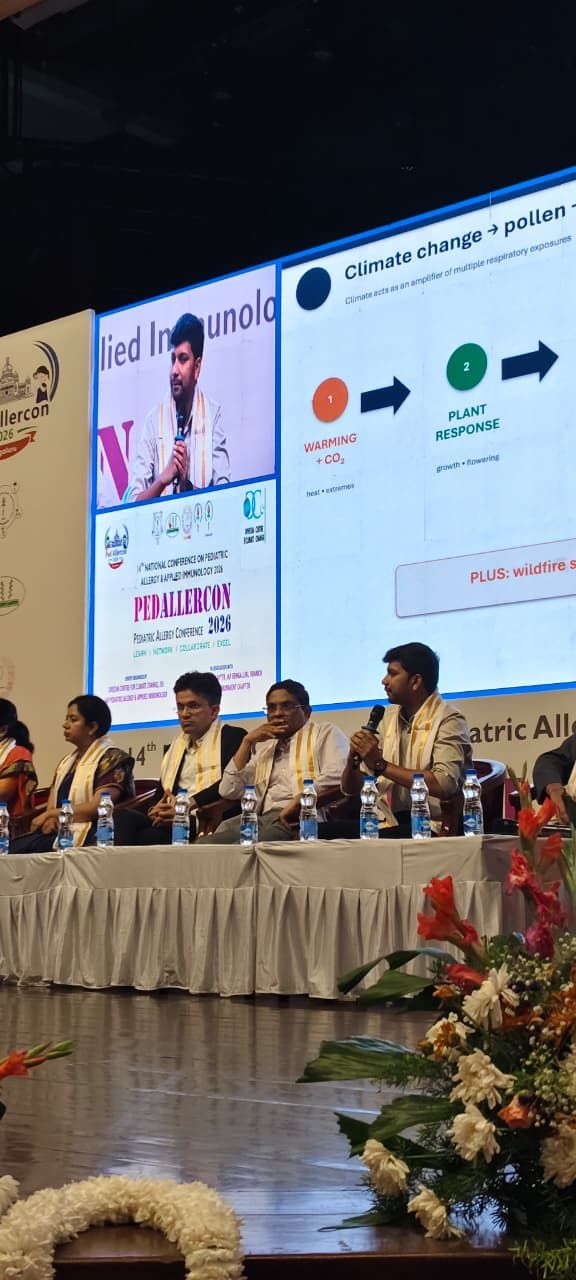
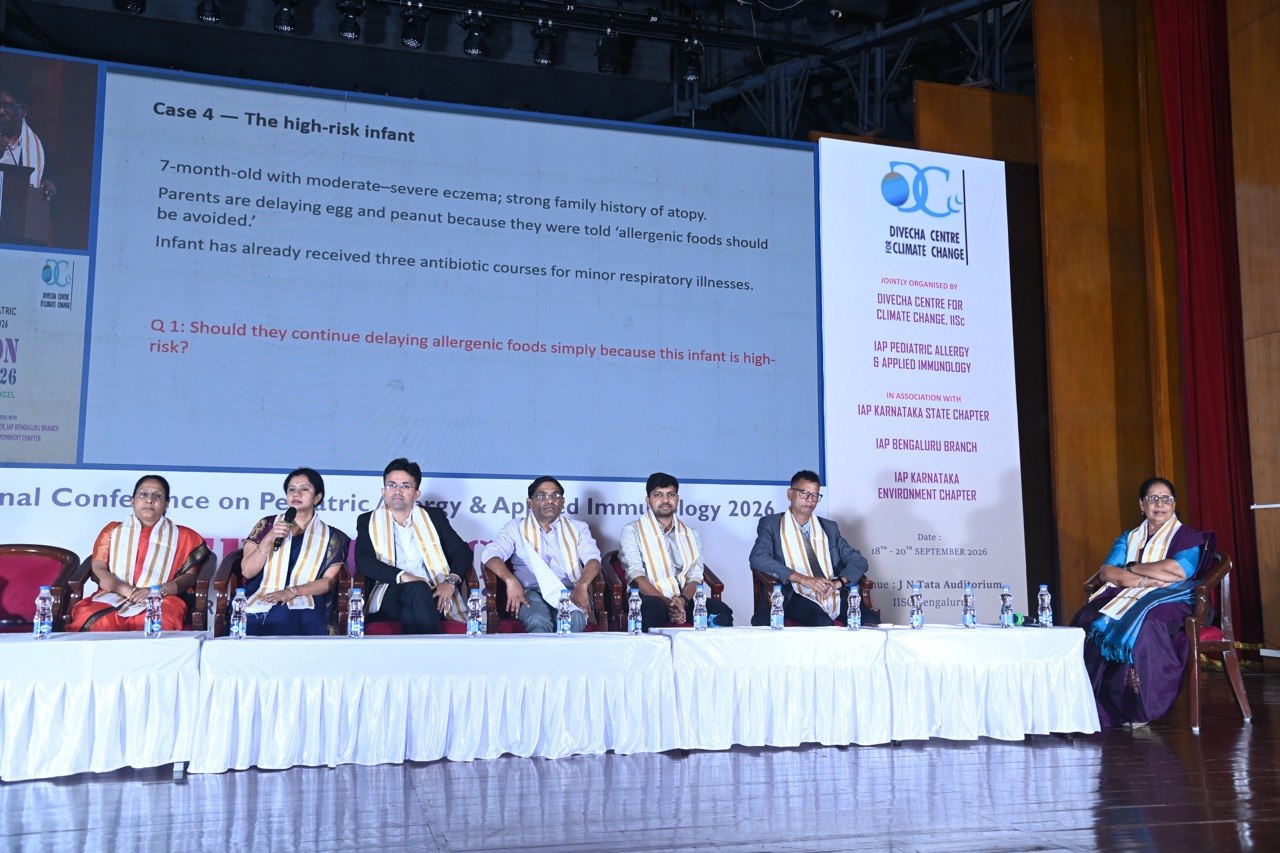
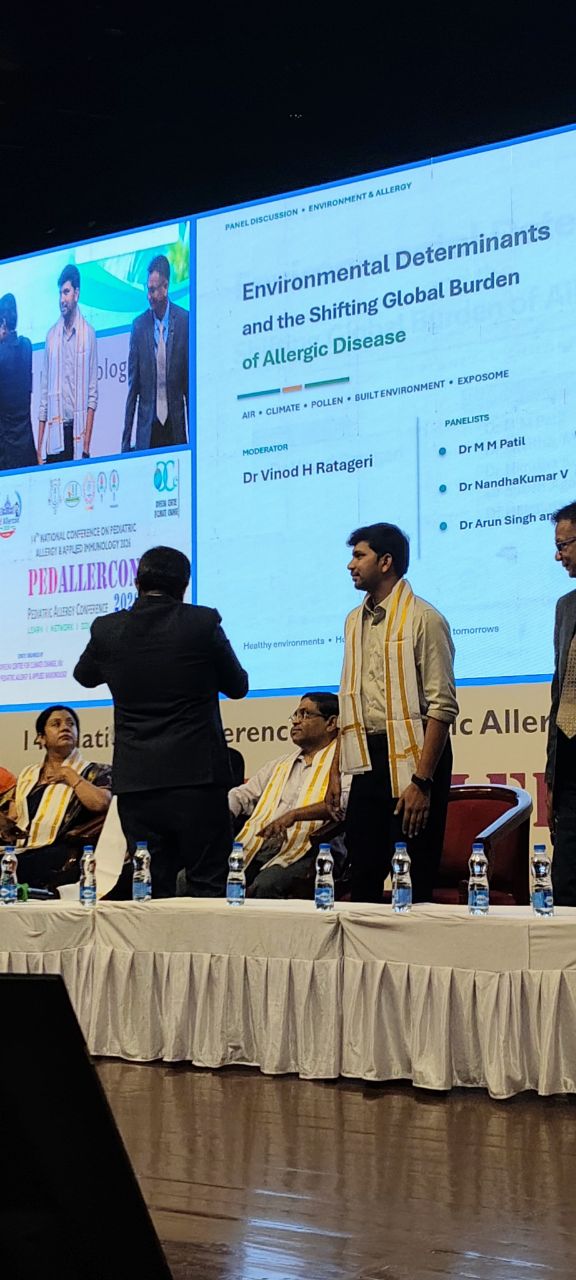
Dr. Nandhakumar V, Associate Professor, Department of Paediatrics, Adichunchanagiri Institute of Medical Sciences (AIMS), was invited as a Panelist at “PedAllercon 2026” – the 14th National Conference on Pediatric Allergy & Applied Immunology with Environmental Issues, in Panel Discussion 1 – “Environmental Determinants and the Shifting Global Burden of Allergic Disease”, moderated by Dr Vinod H Ratageri.
|
|
2
|
Organizing Department/ Institution/ Committee/ Others
|
PedAllercon 2026 was organised by the Pediatric Allergy and Applied Immunology Chapter Karnataka (PAAI) of the Indian Academy of Pediatrics.
|
|
3
|
Type of Event
|
Academic and Continuing Medical Education (CME) National Conference, comprising orations and global leadership lectures, panel discussions, debates, case-based sessions, oral and poster presentations of abstracts, and pre-conference hands-on workshops in allergy diagnosis, allergy therapeutics, food and drug allergy, and pulmonary function tests.
|
|
4
|
Level of Event
|
National – 14th National Conference on Pediatric Allergy & Applied Immunology with Environmental Issues (PedAllercon 2026)
|
|
5
|
Collaboration/ Accreditation if any
|
Divecha Centre for Climate Change, IAP Karnataka State Branch, IAP Karnataka State Environment Chapter, and IAP Bengaluru.
|
|
6
|
Date/s and Duration
|
19th and 20th September 2026 (pre-conference workshops on 18th September 2026). Dr. Nandhakumar V’s panel discussion was held on Day 1 (Saturday, 19th September 2026), Hall A, between 9:30 AM and 10:10 AM.
|
|
7
|
Venue
|
J N Tata Auditorium, Indian Institute of Science (IISc), Bengaluru.
|
|
8
|
Details of delegates/ target audience
|
Paediatricians, pediatric allergists and immunologists, faculty members, postgraduate students, and other healthcare professionals attending PedAllercon 2026.
|
|
9
|
Total Number of delegates/ Audiences attended
|
A large number of 300 delegates attended the conference.
|
|
10
|
Objectives of the Event
|
• To provide a national platform for academic exchange and continuing medical education in pediatric allergy, asthma and applied immunology.
• To examine the environmental determinants – air, climate, pollen, built environment and exposome – behind the shifting global burden of allergic disease.
• To help paediatricians understand how climate change alters aeroallergen exposure and to recognise outbreak phenomena such as thunderstorm asthma.
• To promote early-warning and anticipatory approaches to prevention by integrating weather, pollen and pollution data.
• To encourage networking and collaboration among faculty, postgraduate students and specialists, and to nurture young researchers through oral and poster presentations.
|
|
11
|
Brief Report of the Event (in about 200 words)
|
Dr. Nandhakumar V, Associate Professor, Department of Paediatrics, AIMS, participated as an invited panelist in Panel Discussion 1 – “Environmental Determinants and the Shifting Global Burden of Allergic Disease” – at PedAllercon 2026, held on 19th September 2026 at J N Tata Auditorium, IISc Bengaluru. The session, moderated by Dr Vinod H Ratageri, explored air, climate, pollen, the built environment and the exposome.
Responding to the moderator’s questions, Dr. Nandhakumar explained how climate change alters pollen timing, duration, quantity and geographic range, interacts with air pollution, and increases exposure to heat, ozone, wildfire smoke, dust and extreme weather. He emphasised that climate change is not an allergen itself but modifies multiple exposure systems, acting as an amplifier of several respiratory exposures simultaneously. He also highlighted that shifting plant ranges and aeroallergen seasons can redraw the allergy map – children may present outside the traditional local pollen season, and older pollen calendars may become less reliable – making forecasting using weather, pollen and pollution data part of prevention.
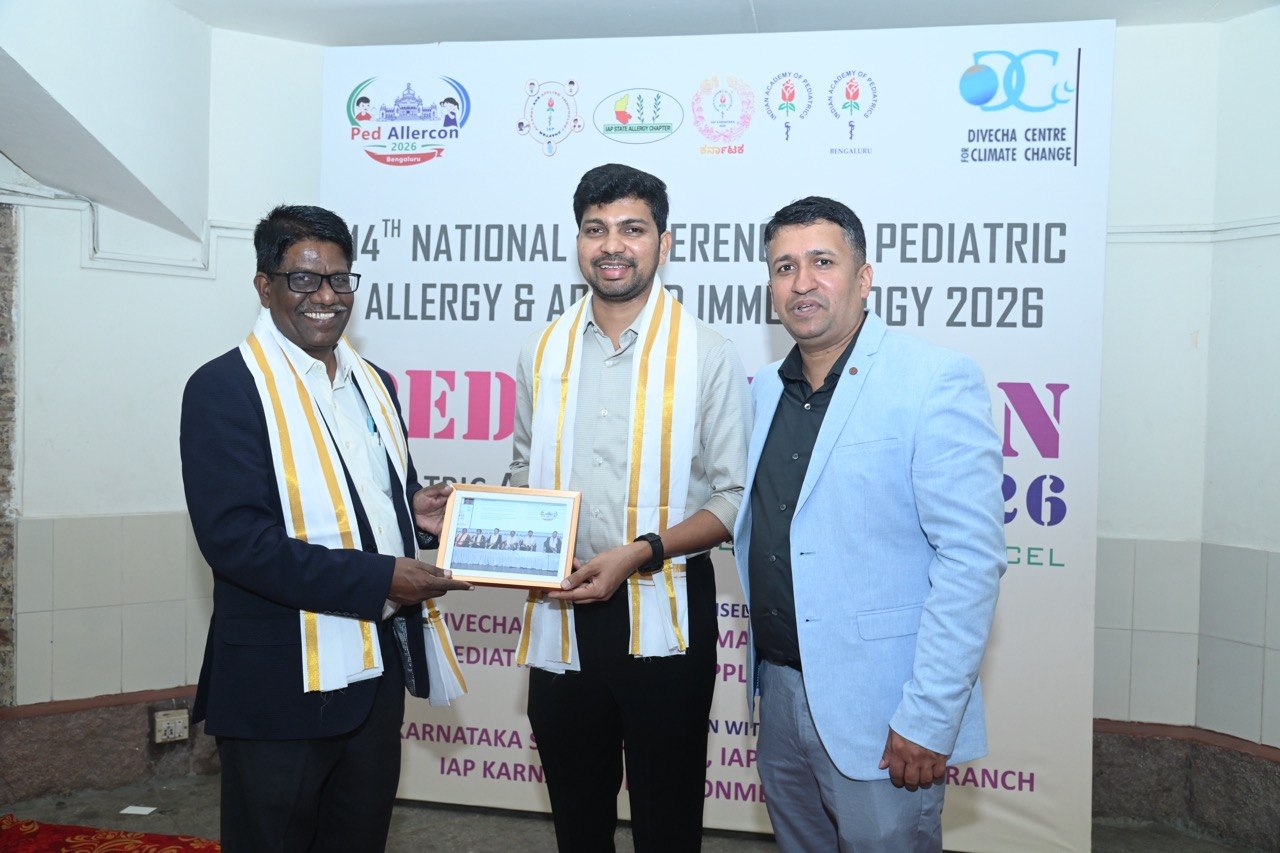
Through a case of a 13-year-old with allergic rhinitis and mild asthma developing sudden severe wheeze during a thunderstorm, with similar patients clustering in the emergency department, he illustrated thunderstorm asthma as an environmental event that becomes an emergency-department event. He was felicitated by the organisers during the conference.
|
|
12
|
SDGs
|
• SDG 3 – Good Health and Well-Being
• SDG 4 – Quality Education
• SDG 13 – Climate Action
• SDG 17 – Partnerships for the Goals
|
|
13
|
Feedback Analysis (Brief)
|
The panel discussion was well received by the delegates, who appreciated its clinical relevance to everyday paediatric practice, the clear linking of climate, pollution and pollen exposure to allergic disease, and the interactive case-based format.
|
|
14
|
Outcome
|
• Enhanced awareness among delegates on the environmental determinants of childhood allergic disease, including the effects of climate change, pollen and air pollution.
• Improved recognition of thunderstorm asthma and other weather-related respiratory presentations, and of the role of forecasting in prevention.
• Recognition of Dr. Nandhakumar V’s contribution as an invited panelist through felicitation by the organisers.
• Strengthened academic visibility and networking of the Department of Paediatrics, AIMS, under ACU, with the IAP allergy fraternity.
|