|
Sl No
|
Particulars In Field
|
Inputs
|
|
1
|
Events Name
|
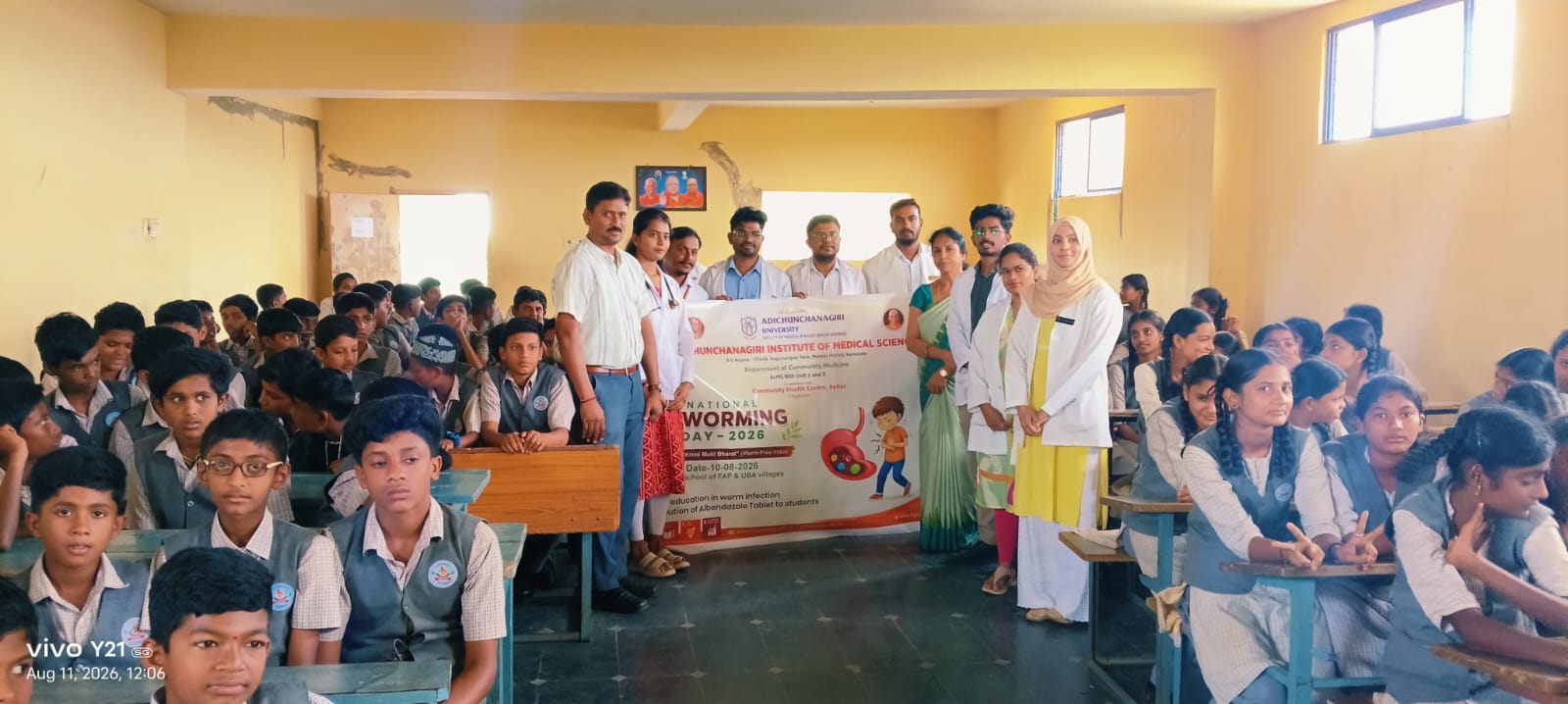
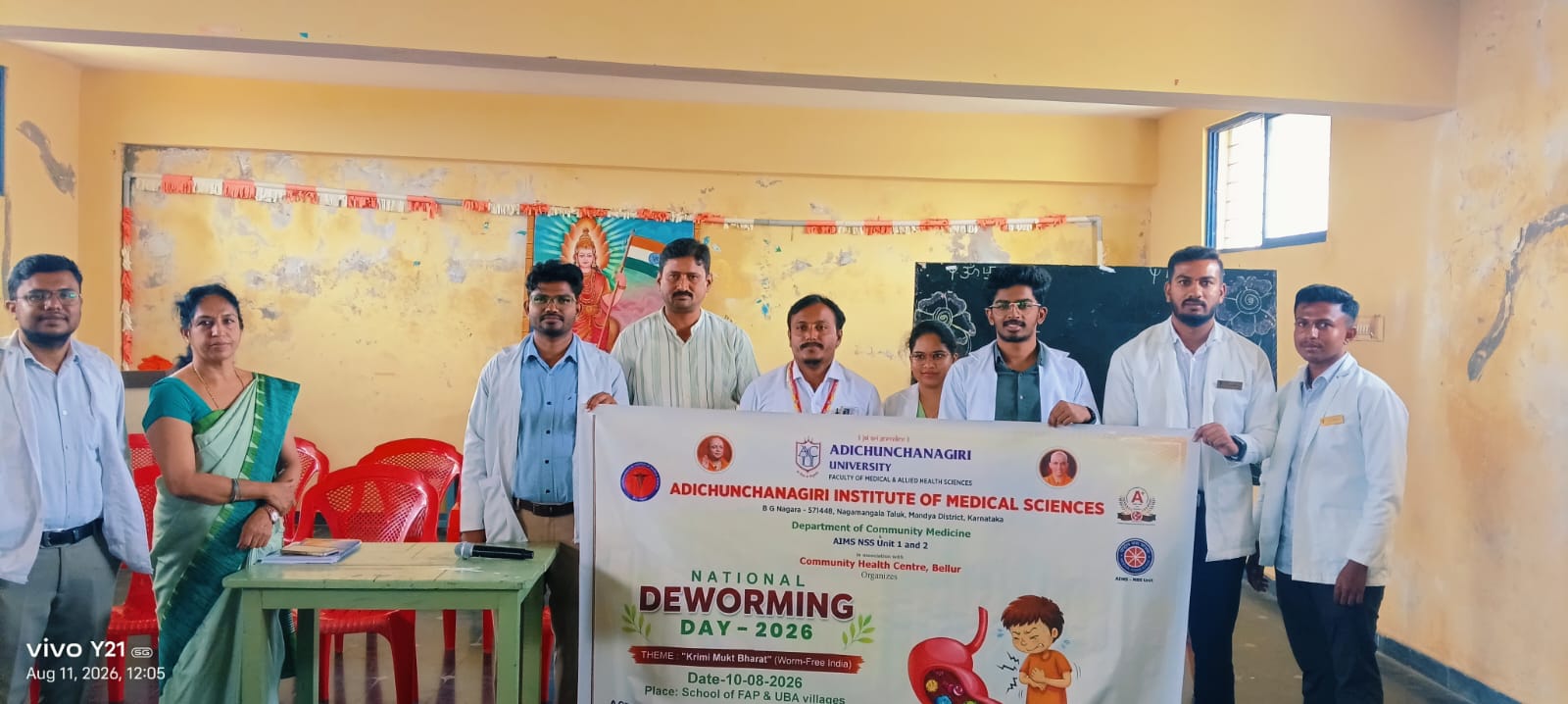
National Deworming Day 2026 – Health Education and Albendazole Distribution Programme
|
|
2
|
Organizing Department/ Institution/ Committee/ Others
|
Department of Community Medicine, AIMS NSS Units 1 & 2, Adichunchanagiri Institute of Medical Sciences (AIMS), in association with Community Health Centre, Bellur
|
|
3
|
Type of Event
|
Health Awareness and Deworming Programme
|
|
4
|
Level of Event
|
Community Outreach
|
|
5
|
Collaboration/ Accreditation if any
|
Community Health Centre, Bellur; AIMS NSS Units 1 & 2
|
|
6
|
Date
|
11August 2026
|
|
7
|
Venue
|
School of FAP & UBA villages
|
|
8
|
Details of Delegates/ target audience
|
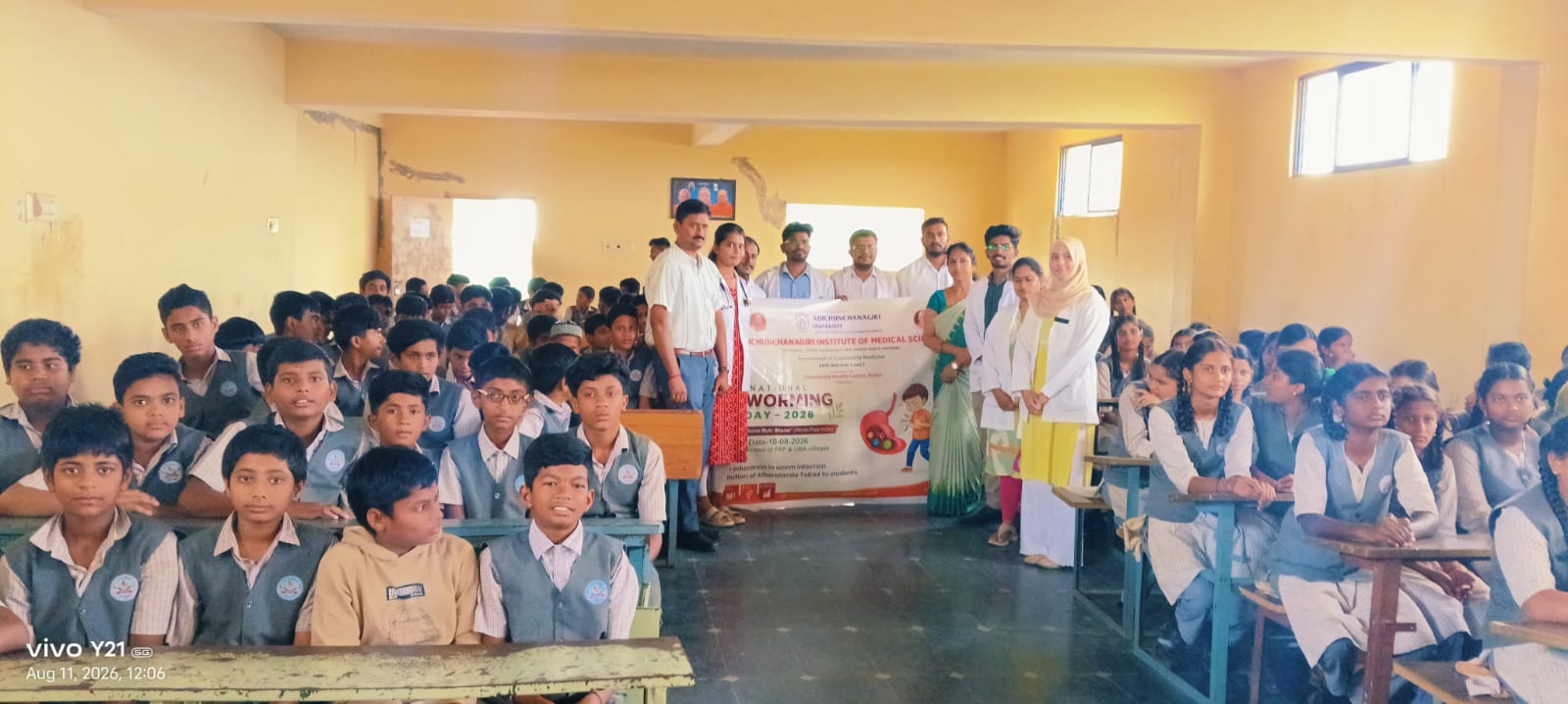
MSW Mr Yatish; Postgraduate students Dr Sujean J N and Dr Parashuram;Interns; Mr Ravikumar health inspector CHC Bellur . Principal , Teachers and students of Bhaktinath school , BGNagara
|
|
9
|
Total Number of Delegates/ audiences attended
|
80 Delegates
|
|
10
|
Objective/s of the events
|
1. To create awareness regarding worm infestation and its prevention.
2. To educate students and the community about personal hygiene and sanitation practices.
3. To promote awareness regarding the importance of regular deworming.
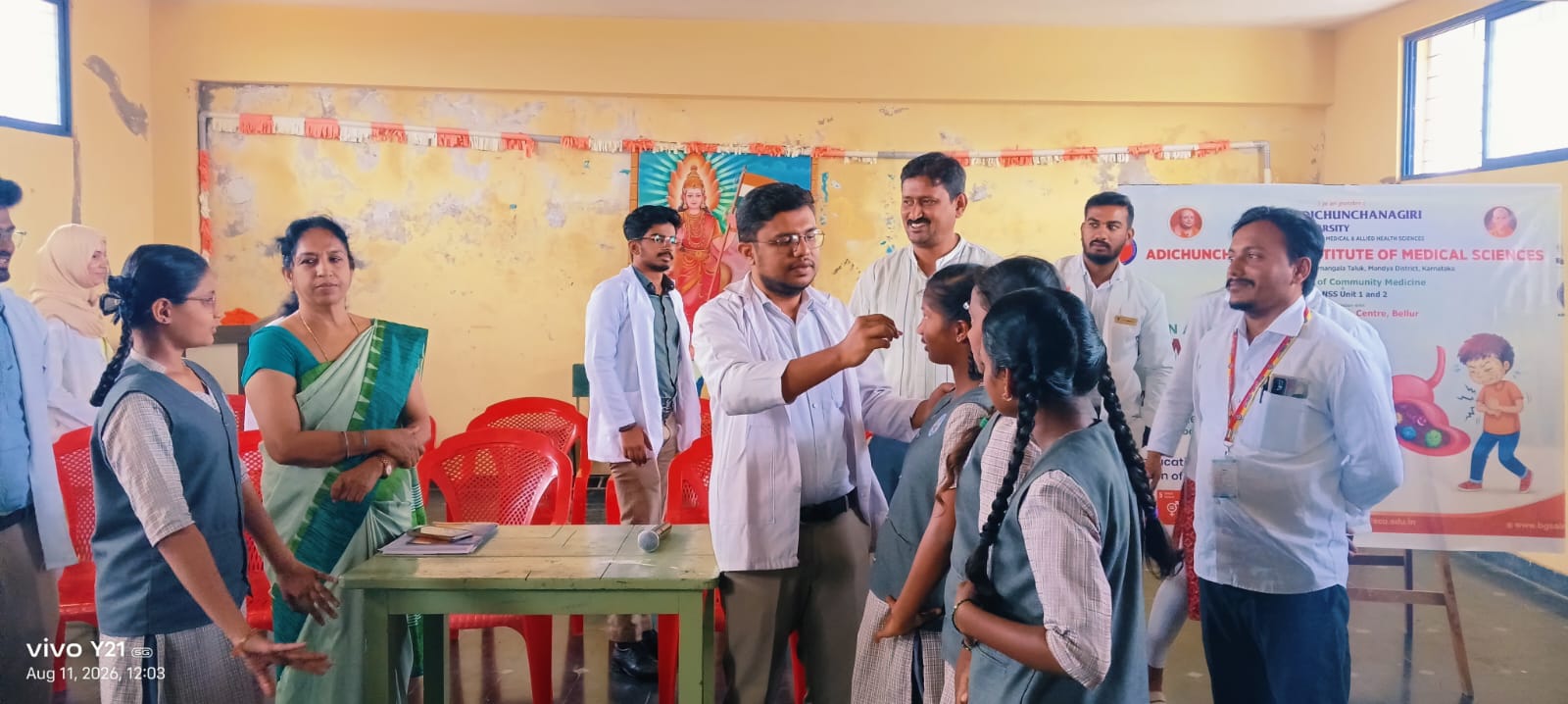
4. To distribute Albendazole tablets to eligible students/beneficiaries.
5. To encourage healthy practices for prevention of intestinal worm infections.
|
|
11
|
Brief report of the event (in about 200 words)
|
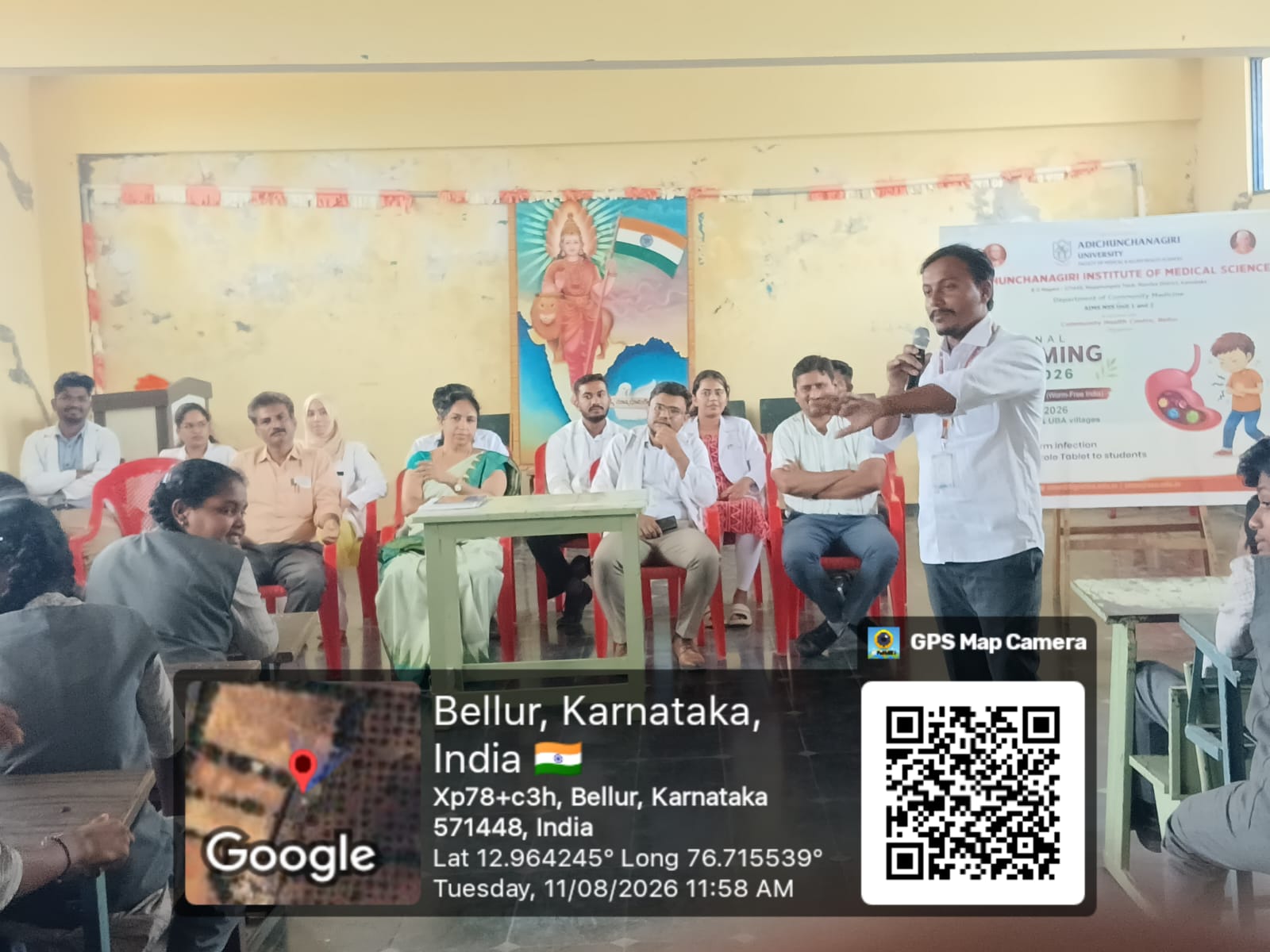
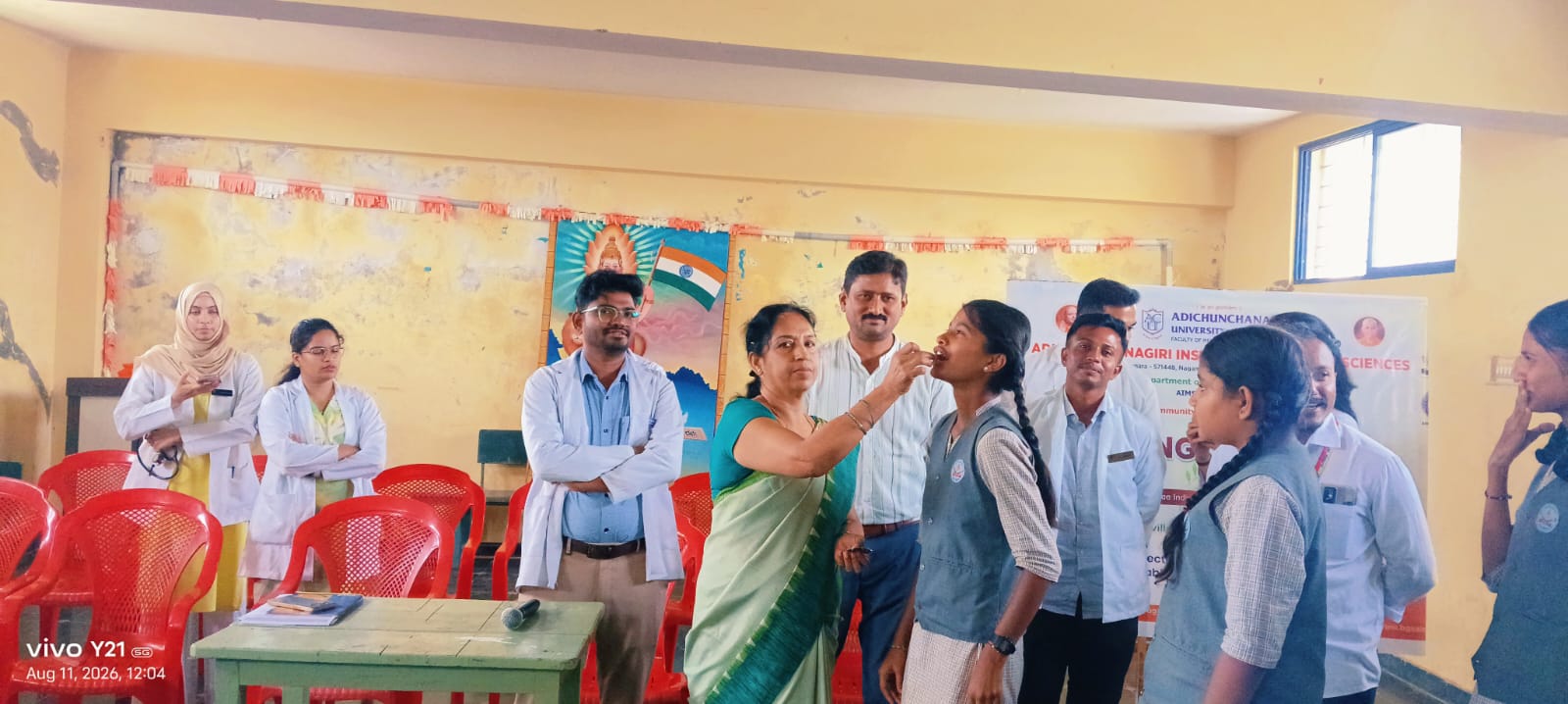
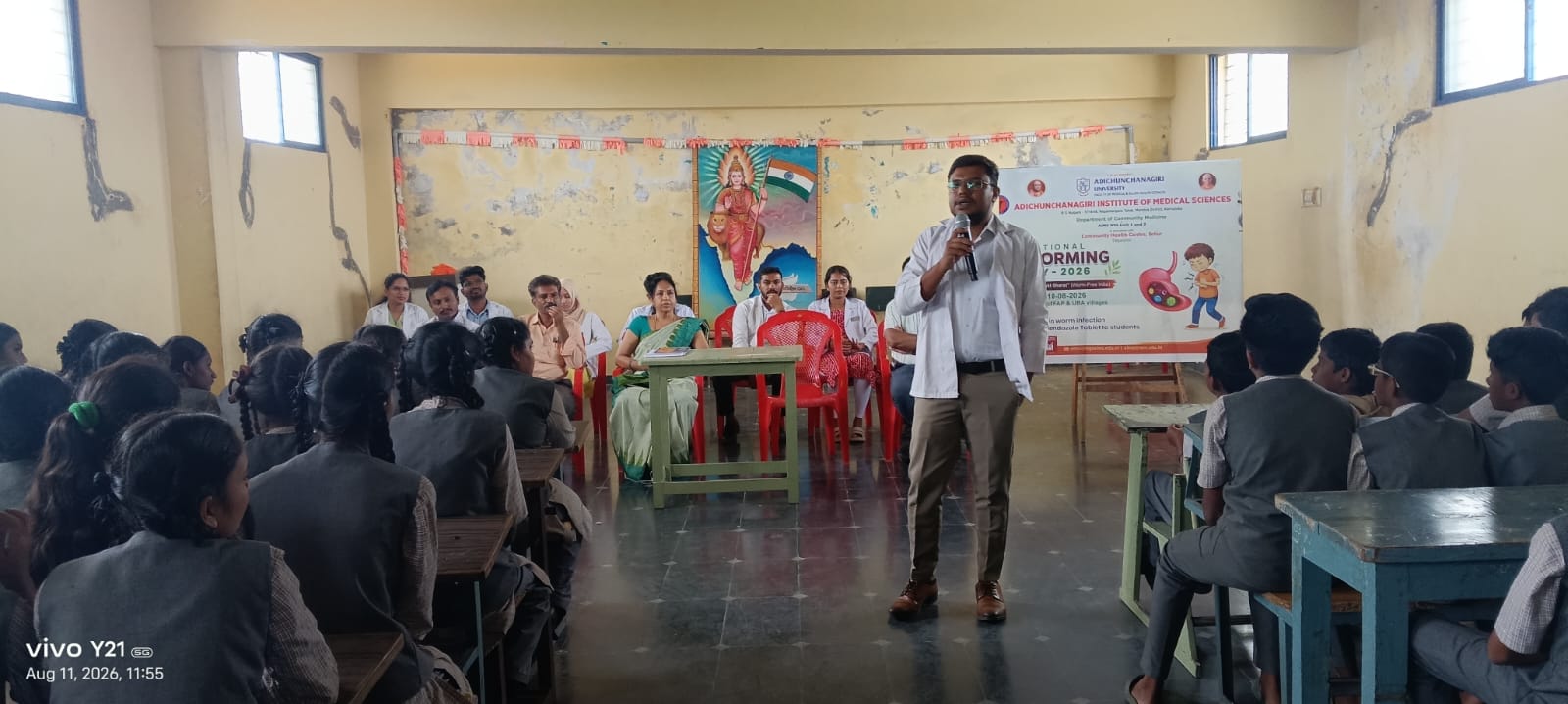
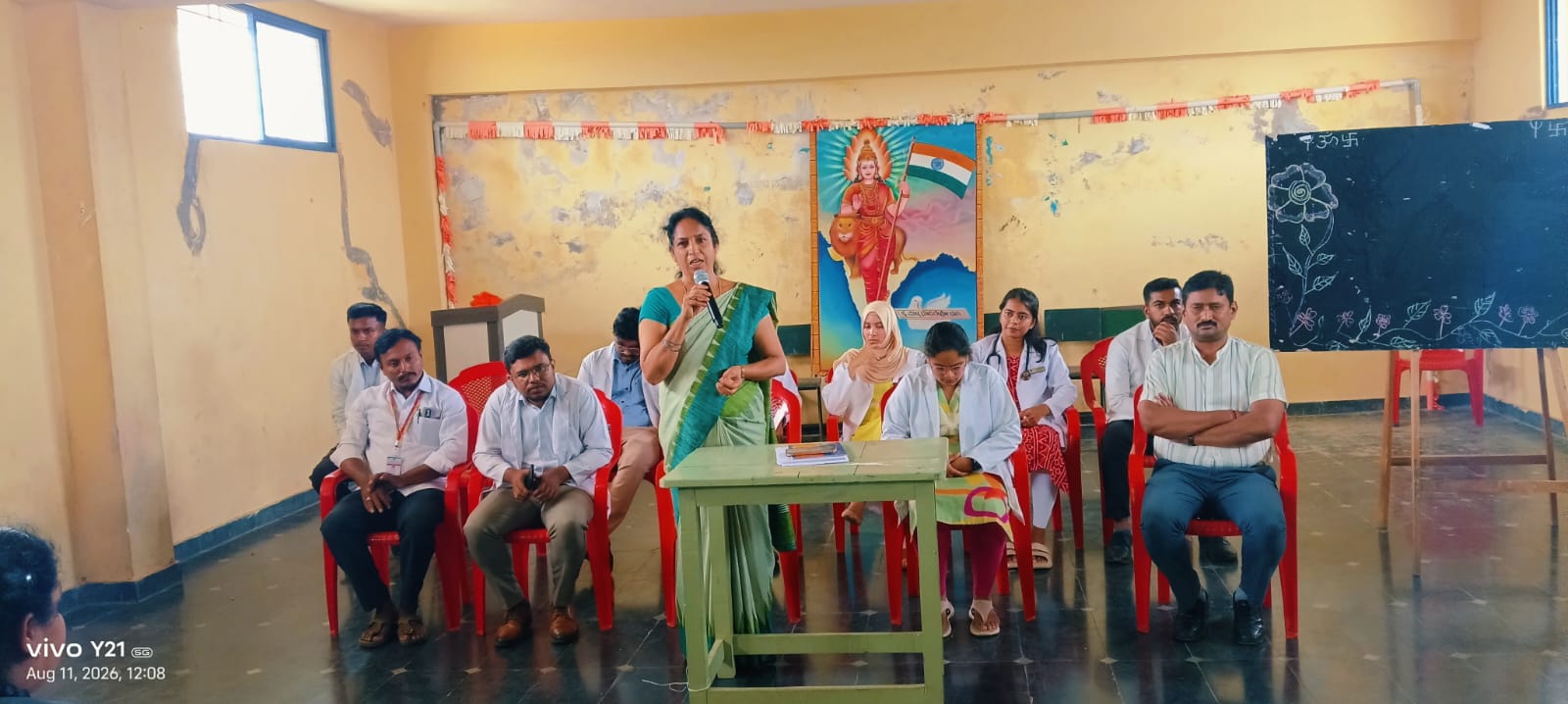
National Deworming Day 2026 was organized by the Department of Community Medicine, AIMS NSS Units 1 & 2, Adichunchanagiri Institute of Medical Sciences, in association with Community Health Centre, Bellur, under the theme “Krimi Mukt Bharat” (Worm-Free India). The programme was conducted on 10 August 2026 at the School of FAP and UBA villages. A total of 80 delegates participated in the programme, including MSW Mr Yatish, postgraduate students Dr Sujean J N and Dr Parashuram, interns, students and teachers of Bhaktinatha school. The programme focused on creating awareness about worm infections, their prevention, and the importance of personal hygiene, sanitation, and regular deworming. Health education was provided to students and community members regarding common ways of preventing worm infestation and maintaining healthy hygiene practices. Following the awareness session, Albendazole tablets were distributed to eligible students/beneficiaries as part of the deworming activity. The programme encouraged participants to adopt appropriate preventive measures and emphasized the importance of community participation in maintaining a worm-free environment. The activity supported the objectives of National Deworming Day by promoting health awareness, preventive practices, and access to deworming services among the target population.
|
|
12
|
Feedback Analysis (brief)
|
The programme received a positive response from the participants. Students and community members actively participated in the health education session and appreciated the information provided on prevention of worm infections, personal hygiene, and deworming. The distribution of Albendazole tablets was also well received.
|
|
13
|
SDGs
|
SDG 3: Good Health and Well-being
Promotes prevention and control of intestinal worm infections through health education and access to deworming services.
SDG 4: Quality Education
Health education provided to students and community members strengthens knowledge and awareness regarding personal hygiene, sanitation, and disease prevention.
SDG 6 – Clean Water and Sanitation
Reinforces the importance of hygiene, sanitation, and healthy environmental practices in preventing intestinal worm infections.
SDG 17: Partnerships for the Goals (through collaboration between health institutions and the community)
|
|
14
|
Outcome
|
1. Increased awareness regarding worm infections and their prevention.
2. Improved understanding of personal hygiene, sanitation, and regular deworming.
3. Albendazole tablets were distributed to eligible beneficiaries.
4. Promoted community participation towards achieving a worm-free India.
|