Faculty of Medical & Allied Health Sciences 08234-200433 / 436 / 242

Sl. No.

Particulars in Field

Inputs

1

Event

VAGUS 2026

2

Organizing Department/ Committee/ Others

–        

3

Type of Event

UG Medical Conference

4

Level of event

National Level

5

Collaboration / accreditation if any

–        

6

Dates/ and Duration

May 21st and 22nd 2026

7

Venue

MYSORE MEDICAL COLLEGE AND RESEARCH INSTITUTE

8

Details of delegates/ target audience

MBBS UG Students  across various medical colleges across India


9

Total Number of delegates/ Audiences attended

Approximately 800 students (from multiple colleges)

10

Objectives

  1. To present an original biomedical research abstract before an expert evaluation panel and peer community, validating the study’s design, findings, and clinical relevance.


  1. To evaluate core foundational knowledge in pre- and para-clinical medical disciplines through a competitive, high-pressure clinical quiz.


  1. To bridge the gap between theoretical basic sciences and active clinical reasoning, fostering the analytical mindset required for upcoming hospital rounds.
  2. To interact with fellow undergraduate medical students and clinical mentors to discuss emerging research trends and diagnostics.

11

Brief Report of the Event

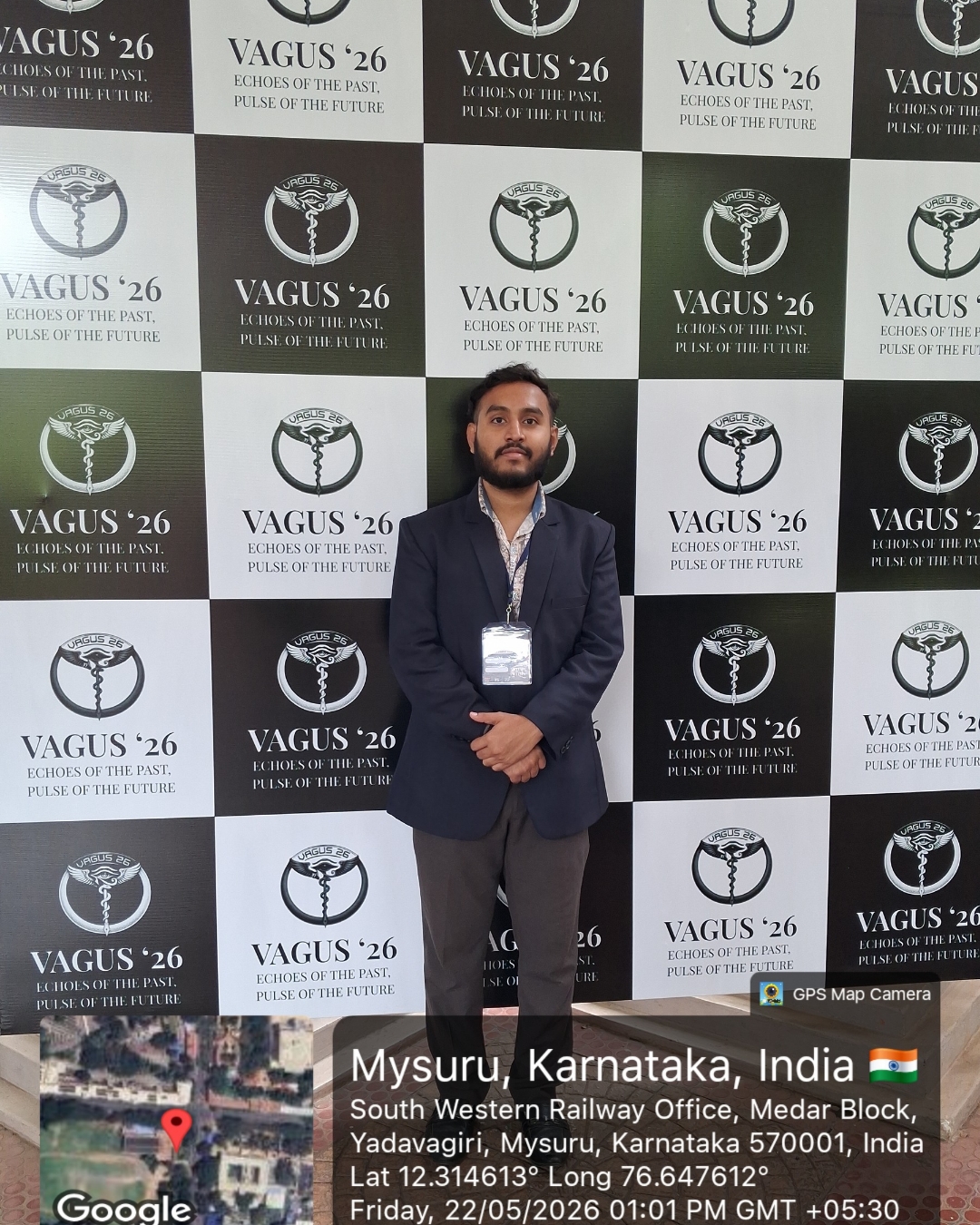
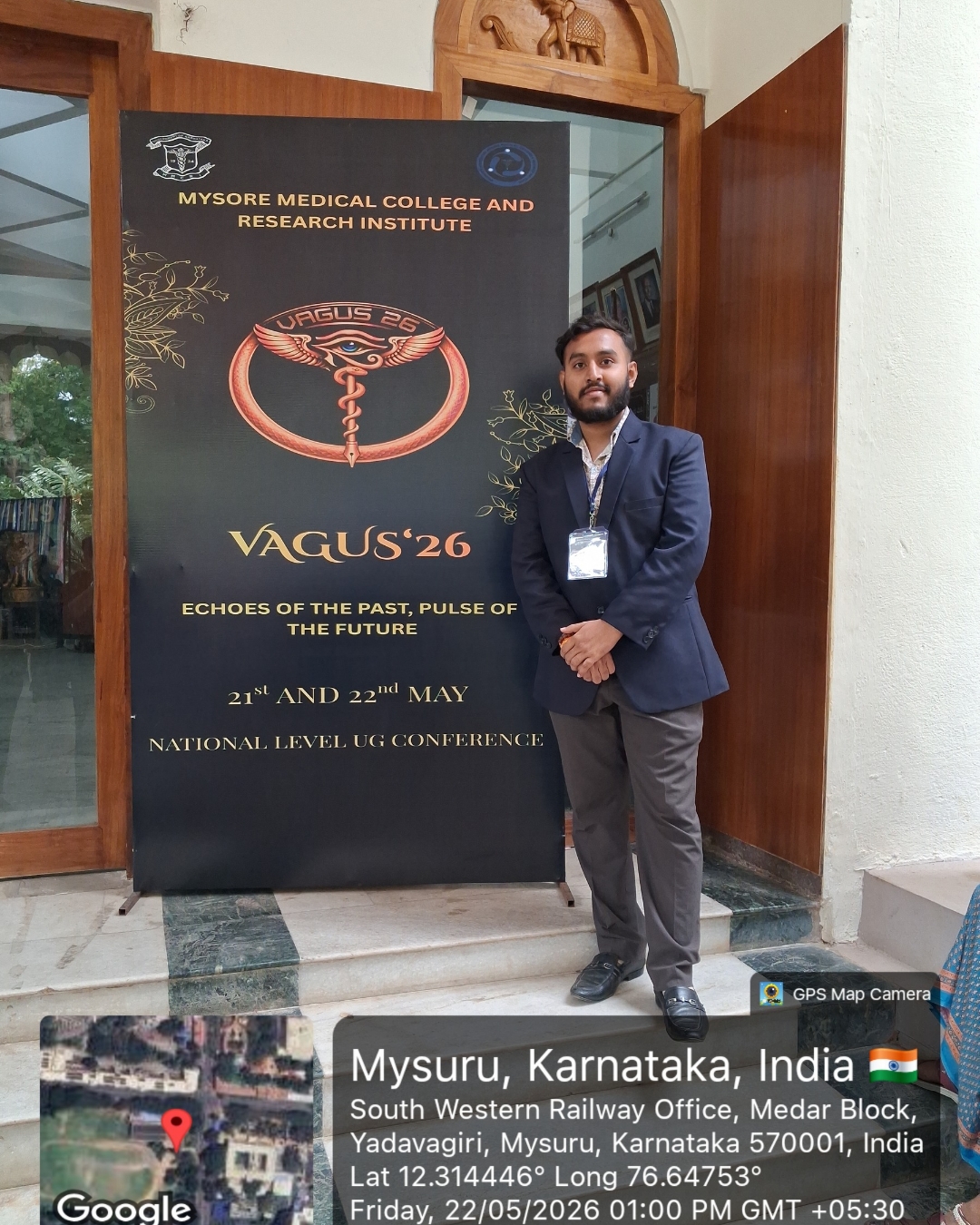
VAGUS 2026 served as a premier undergraduate medical conference designed to challenge foundational knowledge and showcase student-led scientific inquiries.


Mr. Kishan Kumar Sagar – 23MB1102 , actively engaged in two flagship segments:


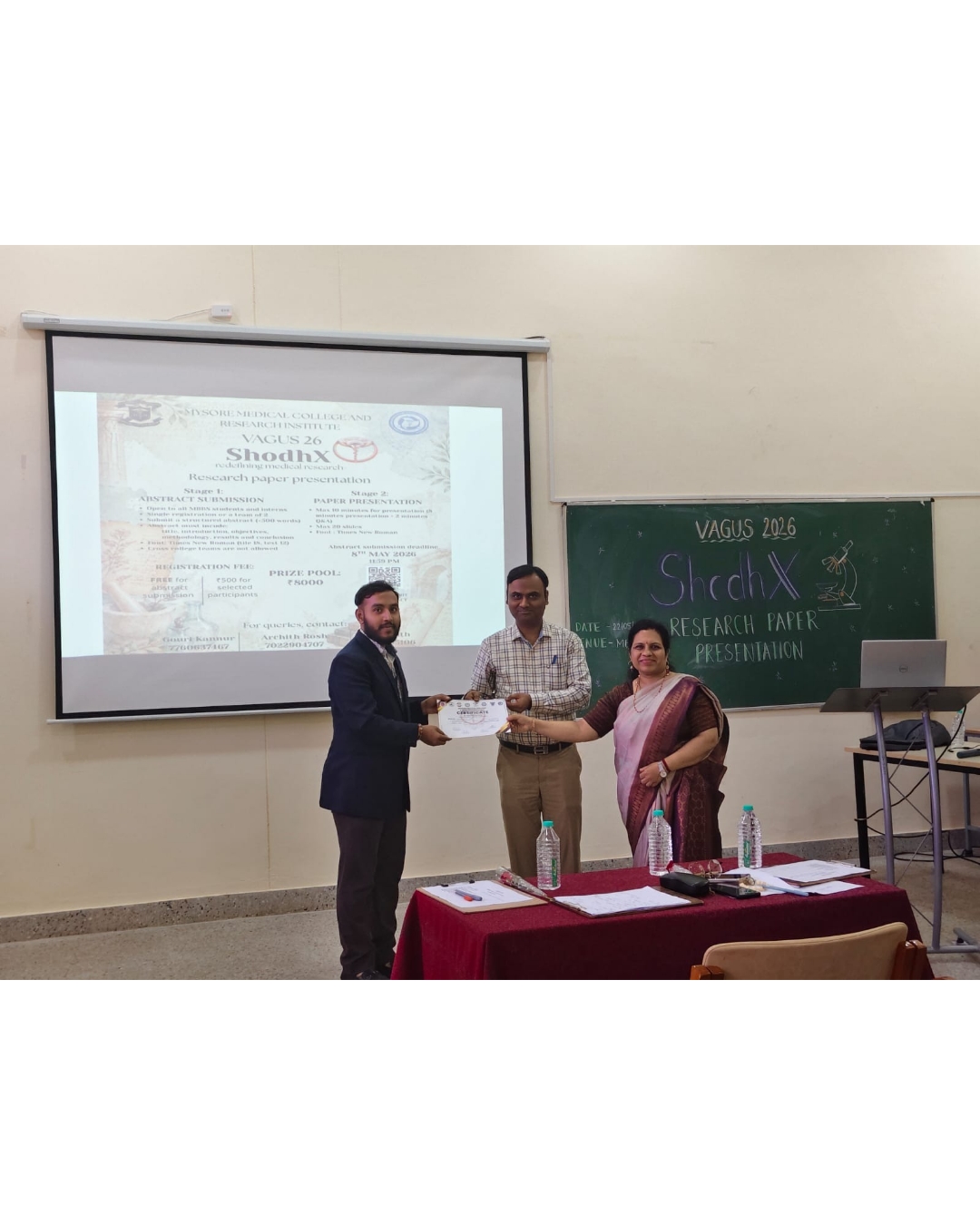
I. ShodhX – Research Paper Presentation


Centered around the theme of medical evolution and evidence-based practice, this segment invited undergraduate researchers to share their scientific contributions.


The Experience: The participant’s research abstract successfully cleared the preliminary screening and was selected for an oral presentation.


The Presentation: The paper was presented using structured visual aids before an evaluation panel of senior clinicians and academicians. The session included a detailed breakdown of the study’s background, methodology, results, and clinical implications, followed by a defense during the panel’s Q&A session.

II. Primordia – The Pre and Para-Clinical Quiz

This high-stakes quiz targeted the critical foundational sciences (Anatomy, Physiology, Biochemistry, Pathology, Microbiology, and Pharmacology) that bridge early medical education with clinical bedside rounds.

The Experience: Moving beyond simple textbook memorization, the competition tested high- pressure logical reasoning, rapid case tracking, and the identification of pathophysiological “breakdowns” in real-time clinical scenarios.

12

Feedback Analysis (Brief)

●      Research Presentation Strengths: Judges commended the structural clarity of the presented abstract, the logical flow from data to conclusion, and the clarity with which clinical or diagnostic translation was articulated during the defense.


●      Quiz Performance Insights: The quiz structure highlighted a highly resilient grasp of paraclinical logic. The capacity to link basic mechanisms to clinical presentations under strict time constraints was a distinct competitive advantage.


●      Areas for Growth: While the performance was strong, the transition from presenting a structured research topic directly into a rapid-fire, multi-subject quiz highlighted the need for rapid cognitive agility and mental task-switching

13

SDG’s Addressed

SDG 3 – GOOD HEALTH AND WELL BEING

SDG 4 – QUALITY EDUCATION

SDG 16 – PEACE , JUSTICE AND STRONG INSTITUTIONS

14

Outcome

●      Abstract Publication & Defense: Successfully defended an original scientific work in a peer- reviewed undergraduate forum, adding a verified presentation to the participant’s academic curriculum vitae.


●      Critical Thinking Refinement: Received expert panel critiques that provided actionable insights into refining future study designs and expanding the scope of analytical research frameworks.

●      Foundational Validation: Confirmed a highly secure grasp over pre- and para-clinical subjects under intense competitive pressure, bridging the gap between textbook mechanics and the rapid diagnostic choices required on clinical rounds.

15

Challenges Faced

●      Time Management under Pressure: Synthesizing complex data sets into a highly restrictive presentation time limit during the ShodhX round without omitting critical methodology or statistical nuances.


●      Clinical Correlation Complexity: Navigating high-pressure quiz scenarios where abstract, non- classical presentations of diseases required rapid decompilation of basic physiological and pathological laws.


●      Cognitive Shift: Managing the rapid shift in focus from a deeply technical presentation of a single research topic to a broad-spectrum, rapid-fire evaluation across multiple basic science subjects.

16

Recommendations

●      Advanced Abstract Layering: For future conference presentations, develop hyper-focused, single-slide methodology dashboards to maximize presentation density and preserve more time for the Q&A defense.

●      Continuous Case-Based Review: Maintain a high trajectory in paraclinical subjects by deliberately reviewing everyday clinical cases on the wards through a mechanism-first lens- explicitly tracking symptoms back to underlying microbiological, biochemical, or pathological breakdowns.

●      Manuscript Conversion: Leverage the positive feedback from the ShodhX panel to convert the presented abstract into a full-text manuscript targeted for index-journal publication