|
Sl. No.
|
Particulars in Field
|
Inputs
|
|
1
|
Event name
|
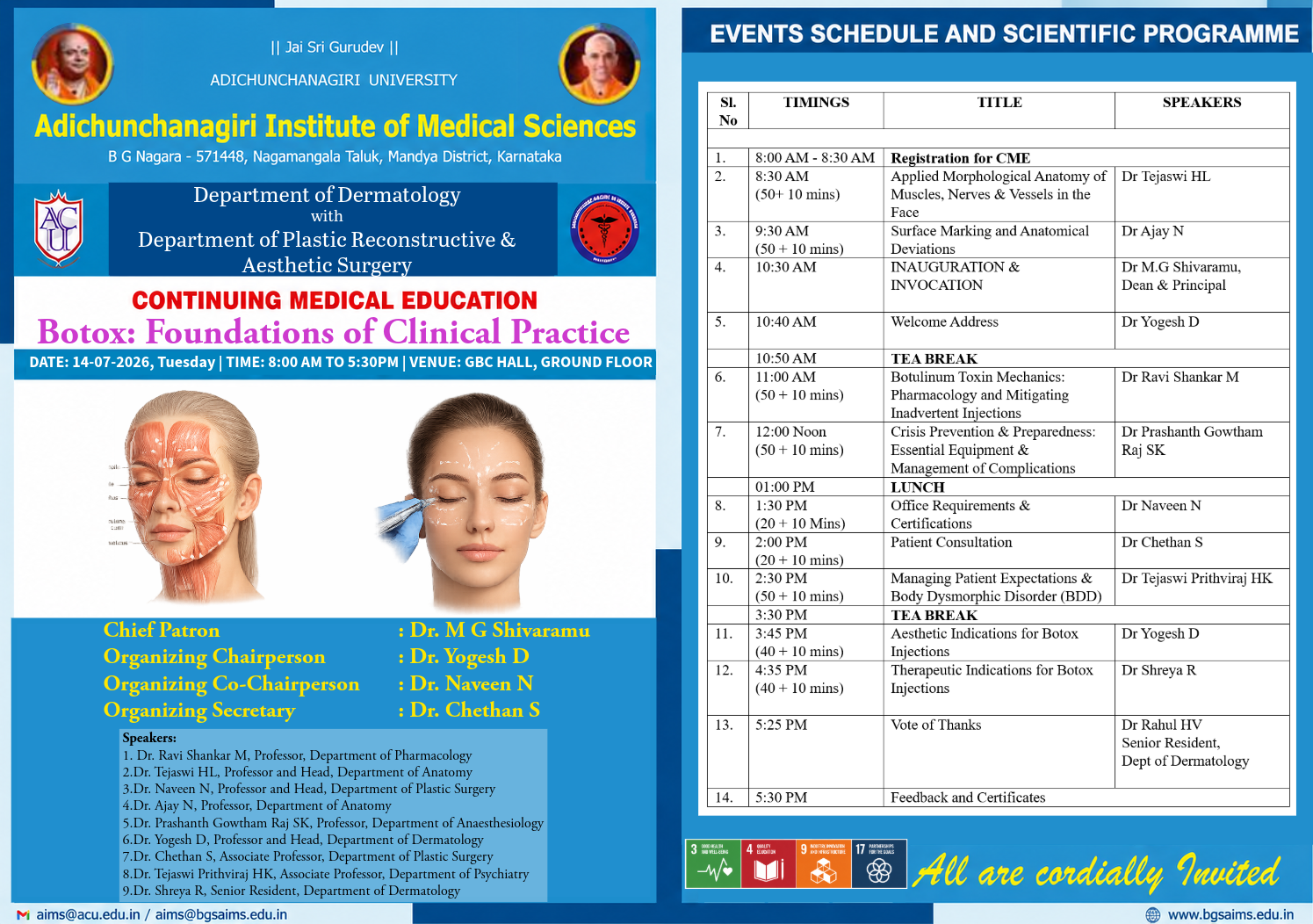
BOTOX: FOUNDATIONS OF CLINICAL PRACTICE
|
|
2
|
Organizing Department/ Committee/ Others
|
Department of Dermatology and Department of plastic aesthetic and reconstructive surgery, AIMS
|
|
3
|
Type of Event
|
CME
|
|
4
|
Level of event
|
College
|
|
5
|
Collaboration / accreditation if any
|
KMC accreditation with 2 credit hours
|
|
6
|
Dates/ and Duration
|
14/07/2026, 9 hours (8.30 am-5:30 pm)
|
|
7
|
Venue
|
Global broadcasting centre, AIMS
|
|
8
|
Details of delegates/ target audience
|
Consultant Dermatologists, General surgeons and plastic surgeons.
Junior residents of Dermatology, general surgery and ENT
Senior residents of plastic surgery.
|
|
9
|
Total Number of delegates/ Audiences attended
|
95
|
|
10
|
Objectives of the event
|
· To strengthen participants’ understanding of the applied anatomy of facial muscles, nerves, vessels, and anatomical variations relevant to botulinum toxin injections.
· To enhance knowledge on pharmacology, mechanism of action, and safe administration of botulinum toxin.
· To enhance participants’ ability to prevent, recognize, and manage complications associated with botulinum toxin procedures through appropriate preparedness and crisis management.
· To familiarize practitioners with the infrastructure, legal requirements, certifications, and office setup necessary for aesthetic practice.
· To develop effective patient consultation and communication skills, including appropriate case selection, informed consent, and expectation management.
· To improve recognition of psychological factors such as Body Dysmorphic Disorder (BDD) that influence aesthetic practice and patient outcomes.
· To impart evidence-based knowledge regarding both aesthetic and Dermatological indications of botulinum toxin in clinical practice.
· To encourage safe, ethical, and patient-centered use of botulinum toxin through multidisciplinary learning and expert interaction.
|
|
11
|
Brief Report of the Event
|
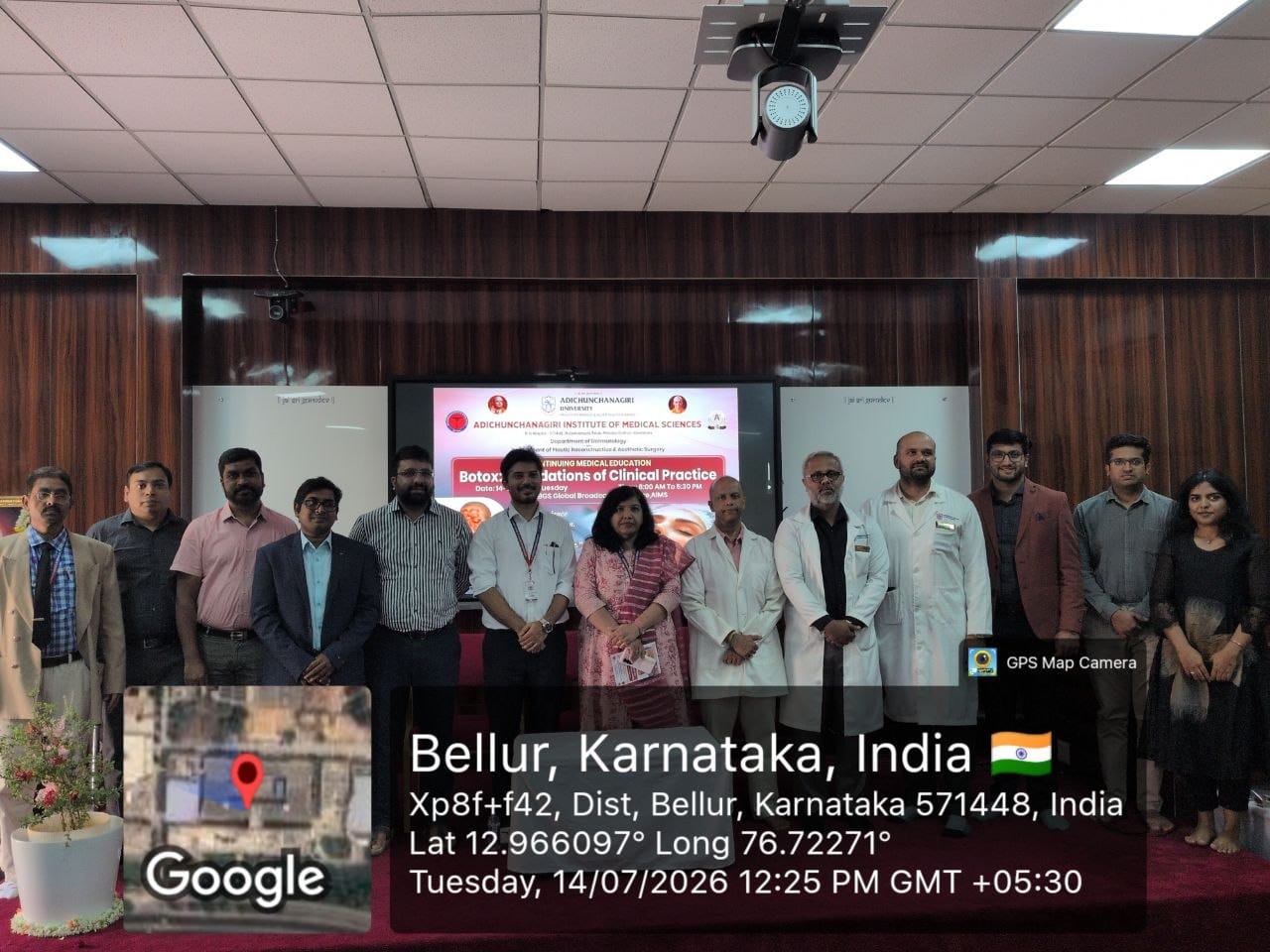
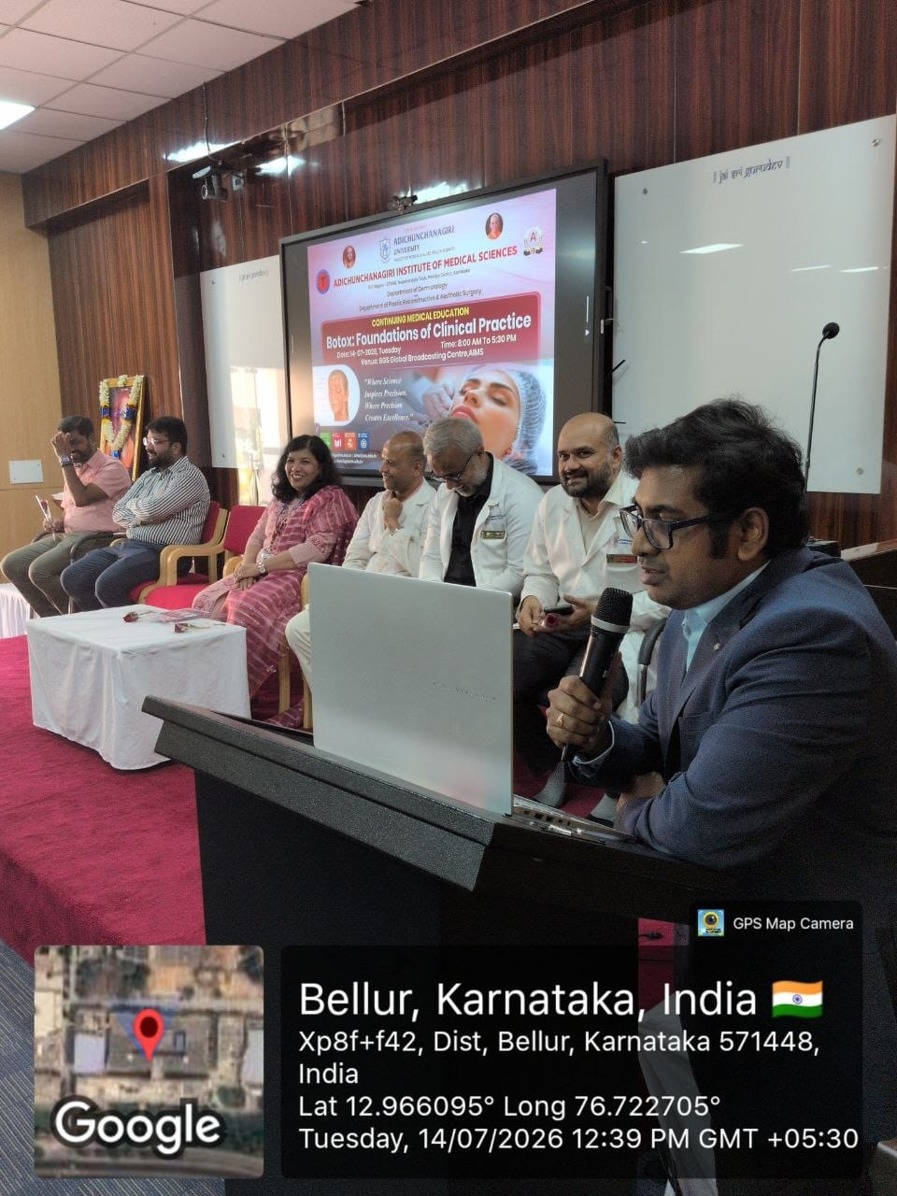
The CME began as scheduled with an invocation, inauguration by Vice-Principal, and a welcome address by Dr. Yogesh D.
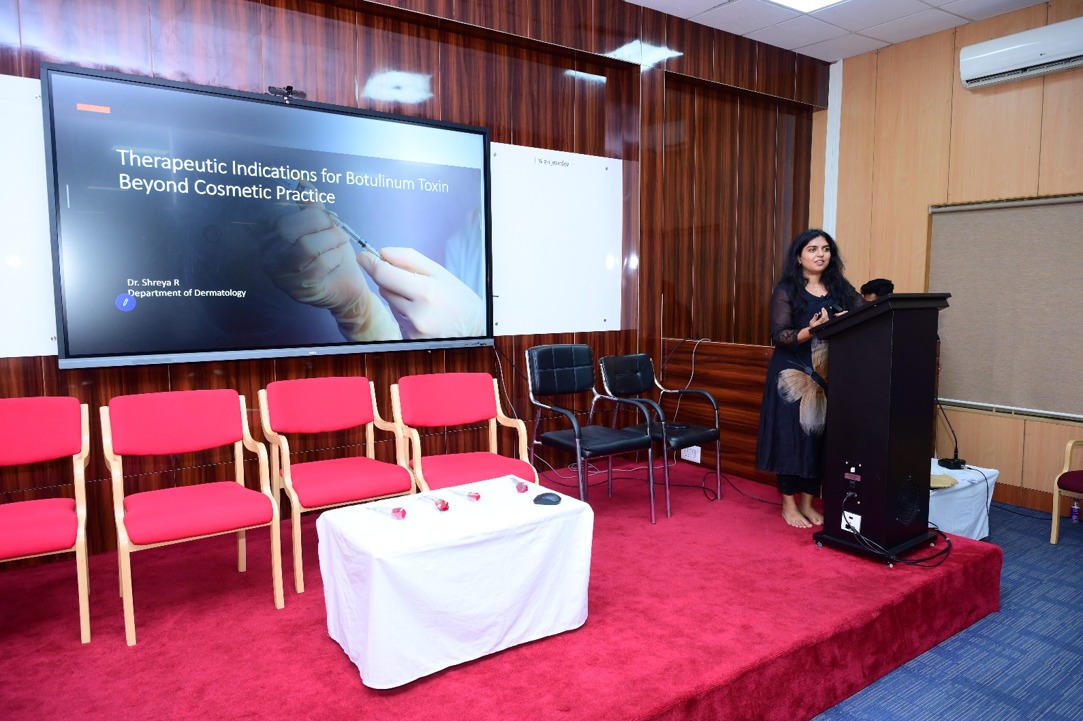
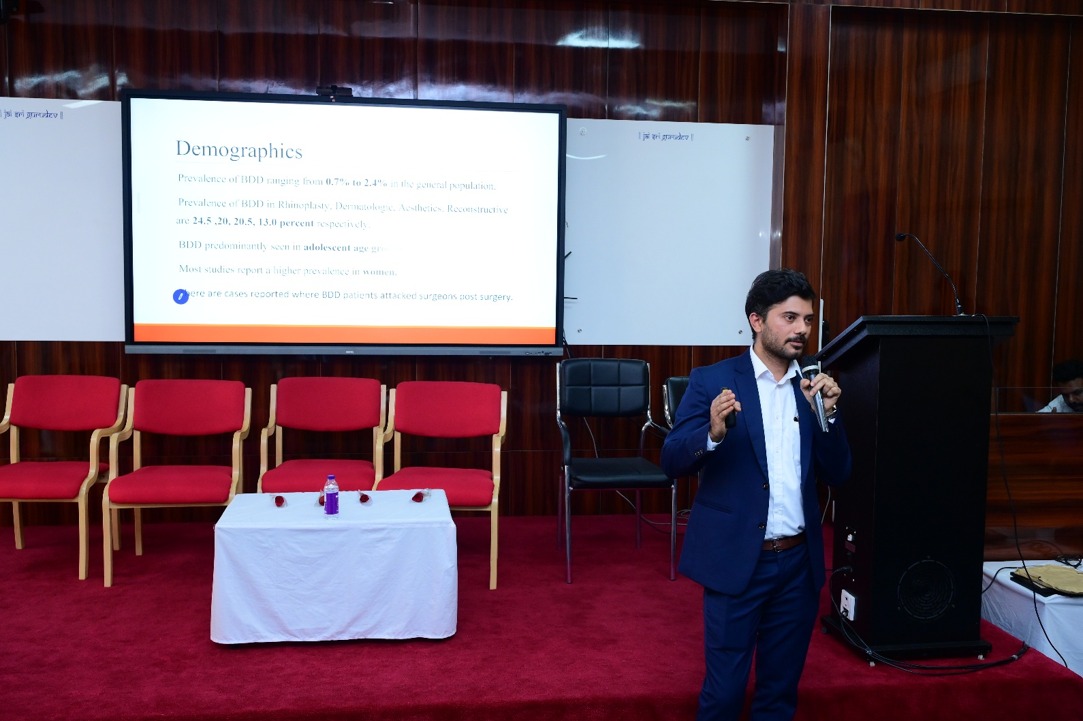
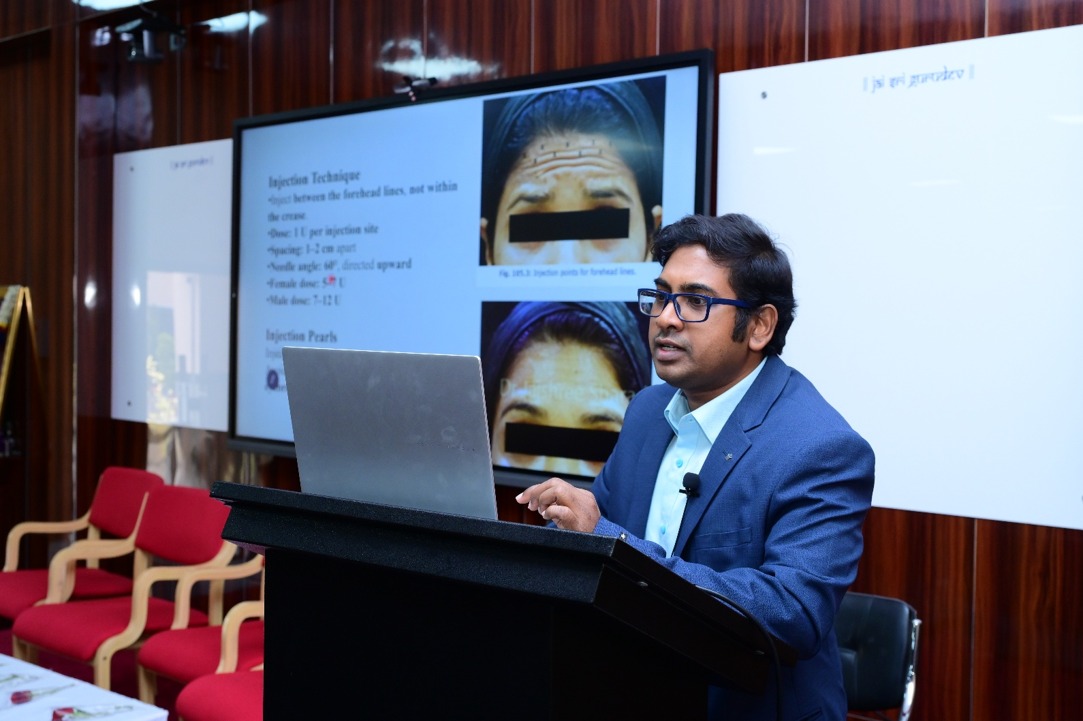
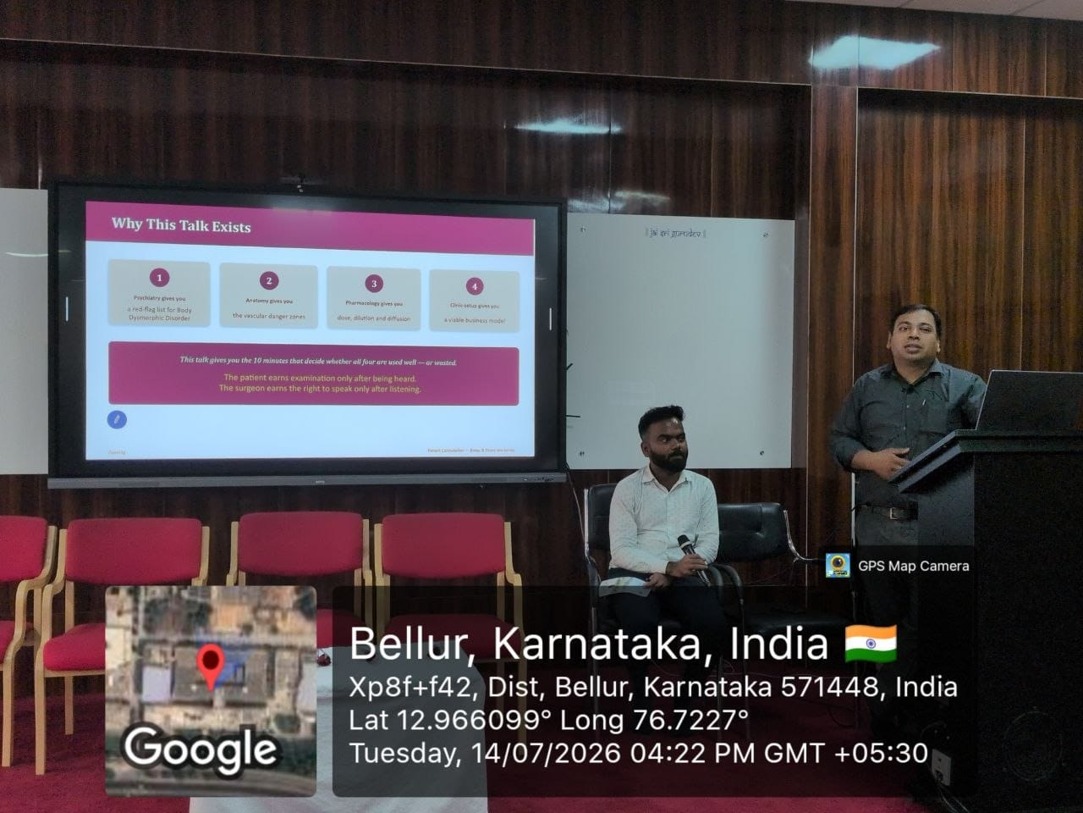
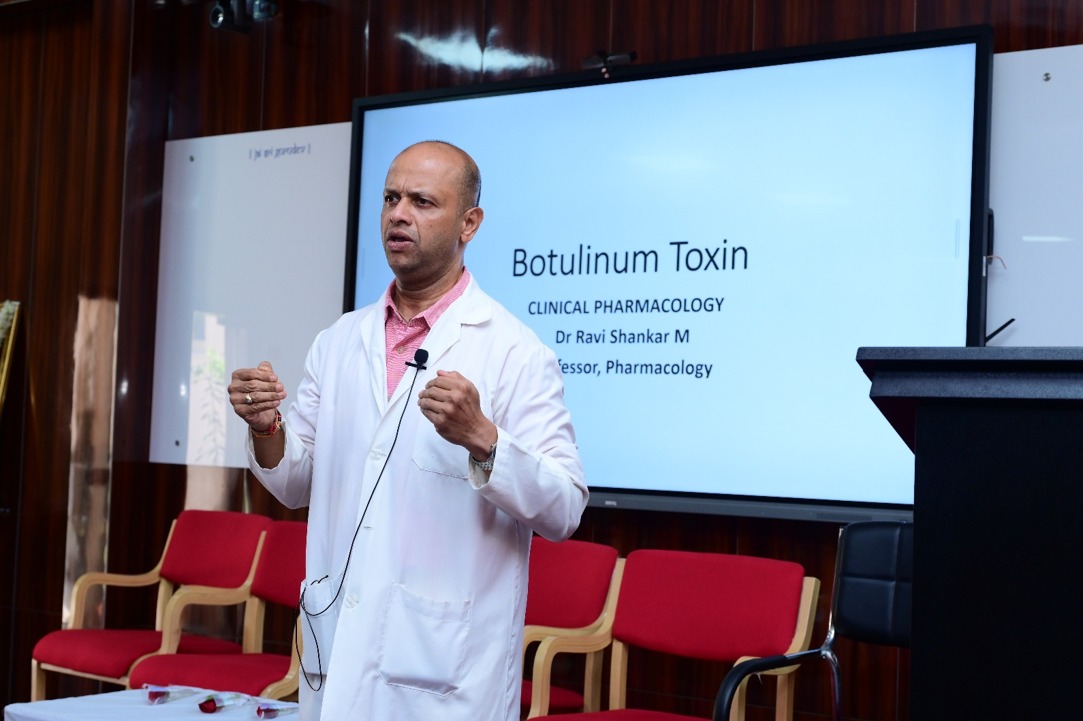
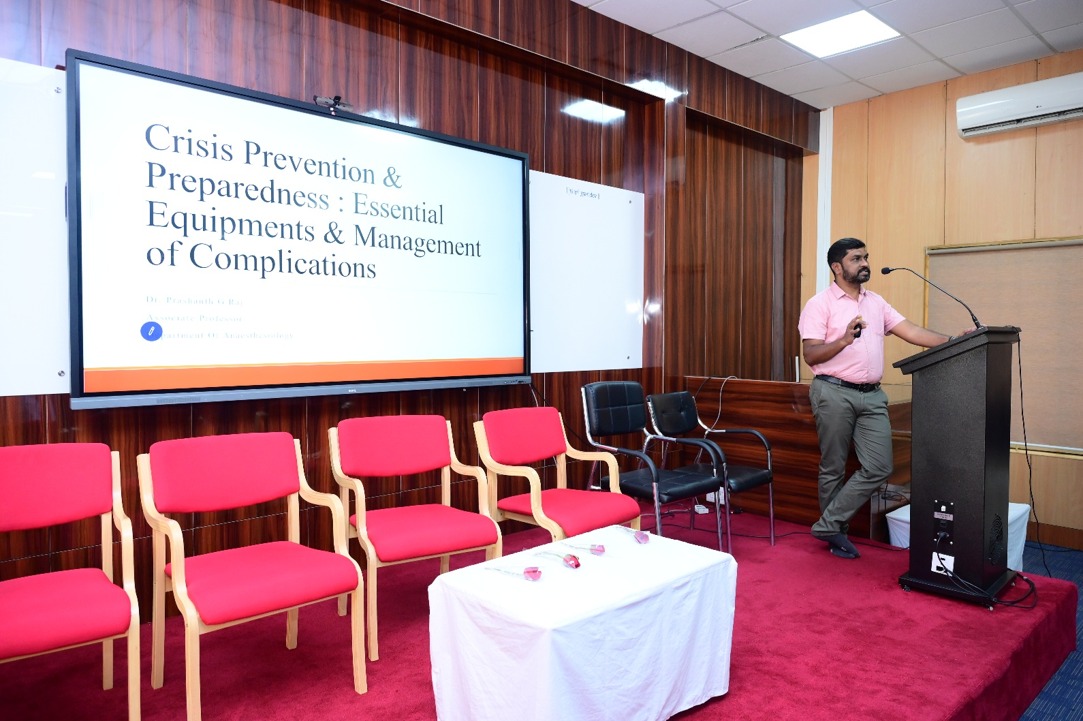
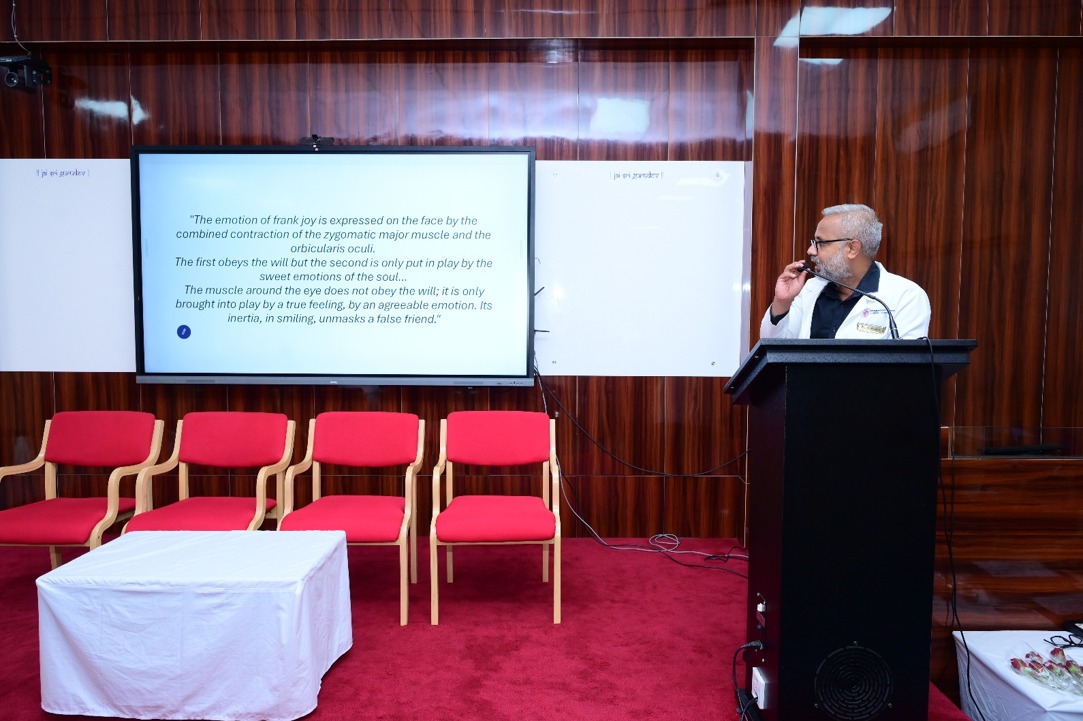
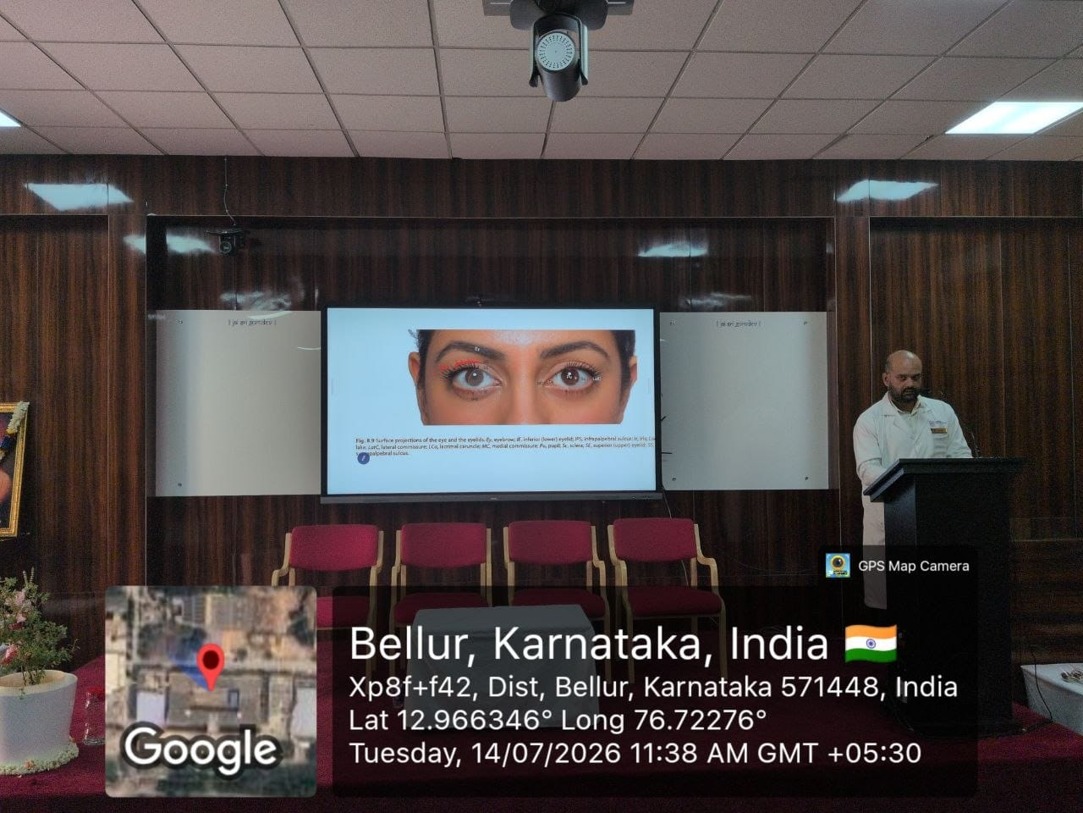
Firstly a talk on applied morphological anatomy of Muscles, nerves and vessels in the face was discussed by Dr. Tejaswi HL followed by session on Surface marking and Anatomical deviations by Dr. Ajay N. After a short tea break it was followed up by a session on Botulinum toxin Mechanics: Pharmacology and Mitigating Inadvertent Injections by Dr. Ravi Shankar M, followed by session on Crisis Prevention and Preparedness by Dr. Prashanth Gowtham Raj SK. After Lunch break afternoon session was started with a talk on Office requirements and Certifications by Dr. Naveen N, followed by Patient Consultation by Dr. Chethan S and managing patient expectations and Body Dysmorphic Disorder by Dr. Tejaswi Prithviraj HK. After a short tea break the session continued with talk on Aesthetic Indications for Botox Injections by Dr. Yogesh D and ended with session on Therapeutic Indications for Botox Injections by Dr. Shreya R.
Vote of thanks was delivered by Dr Rahul H V, Senior Resident, Department of Dermatology. The event compered by Dr. Rakshith D, Post Graduate, Dept. of Dermatology, and Dr. Ayesha Fahima, Post graduate, Dept. of ENT.
Feedback was taken and Certificates were distributed.
|
|
12
|
Feedback Analysis (Brief)
|
Feedback collected from delegates indicated a high level of satisfaction with the CME program. Participants appreciated the scientific content, expert faculty, interactive discussions, stating that these enhanced their understanding of botulinum toxin applications and procedural techniques. The organization, venue, and overall coordination were rated positively. Overall, the feedback reflected that the CME successfully met participants’ learning objectives and contributed to improving their clinical knowledge and practical skills.
|
|
13
|
SDGs Addressed
|
SDG 3 – Good health and well-being
SDG 4 – Quality education
SDG 9 – Industry, innovation and infrastructure
SDG 17 – Partnerships for the goals.
|
|
14
|
Outcome
|
· Participants gained a thorough understanding of facial anatomy essential for accurate and safe botulinum toxin injections.
· Attendees acquired knowledge of the pharmacological principles and mechanism of action of botulinum toxin, enabling evidence-based clinical application.
· Participants developed greater confidence in identifying, preventing, and managing injection-related complications and emergencies.
· The CME enhanced awareness regarding the medicolegal, infrastructural, and certification requirements necessary for establishing an aesthetic practice.
· Delegates learned structured approaches to patient evaluation, consultation, informed consent, and expectation management, thereby improving patient satisfaction and safety.
· Participants appreciated the importance of screening for psychological conditions, particularly Body Dysmorphic Disorder, before undertaking aesthetic procedures.
· The sessions provided practical insights into the expanding aesthetic and therapeutic indications of botulinum toxin across various clinical scenarios.
· The multidisciplinary interactions with experts from Anatomy, Pharmacology, Anaesthesiology, Plastic Surgery, Psychiatry, and Dermatology promoted comprehensive learning and strengthened participants’ competence in delivering safe and ethical botulinum toxin therapy.
|
|
15
|
Challenges Faced
|
The event was conducted successfully with minimal challenges. Minor logistical issues, were effectively managed through prior planning and teamwork. Overall, there were no significant challenges that affected the successful conduct of the CME and workshop.
|
|
16
|
Recommendations
|
More such CMEs and workshops may be conducted on a wide range of topics
|